Monsoon Season in Nepal, Don't Rule Out: It Still Can Be a Great Time to Visit
Introduction
Nepal has four seasons viz. Autumn (September to November), Winter (December to February), Spring (March to May), and Summer/Monsoon (June to August).
The monsoon season also known as rainy season, is one of Nepal's most important season of the year for many reasons. Beginning in around mid-June and lasting until late September, the monsoon brings life-giving rainfall that nourishes forests, fills rivers, and supports the country's agriculture system.
While travelers often associate Nepal with clear autumn skies and vibrant spring blooms, the monsoon season reveals a different kind of beauty – lush green hills, dramatic waterfalls, and peaceful landscapes that few visitors experience in the mountains. Besides this, one of the lesser-known aspects of this season is that it is also marked by numerous cultural celebrations in Nepal's easily accessible cities.
Although travelling in monsoon season is a bit difficult, you can opt for cultural holiday, wildlife safari, or trekking adventure, understanding Nepal's monsoon season will help you make informed travel decisions.
Understanding Monsoon Rain in Nepal
During the summer months, from June to September, the land around the Himalayan region heats up faster, creating a low-pressure system, while the cooler air over the Indian Ocean forms a high-pressure system. As air naturally moves from high pressure to low pressure, moisture-laden winds from the Indian Ocean – particularly the Bay of Bengal, and the Arabian Sea flow toward Nepal. As these winds travel over the warm ocean waters, they absorb large amounts of moisture. When the moisture-filled winds collide with Nepal's hills and the Himalayas, they cool, causing the moisture to condense into clouds and produce rainfall.
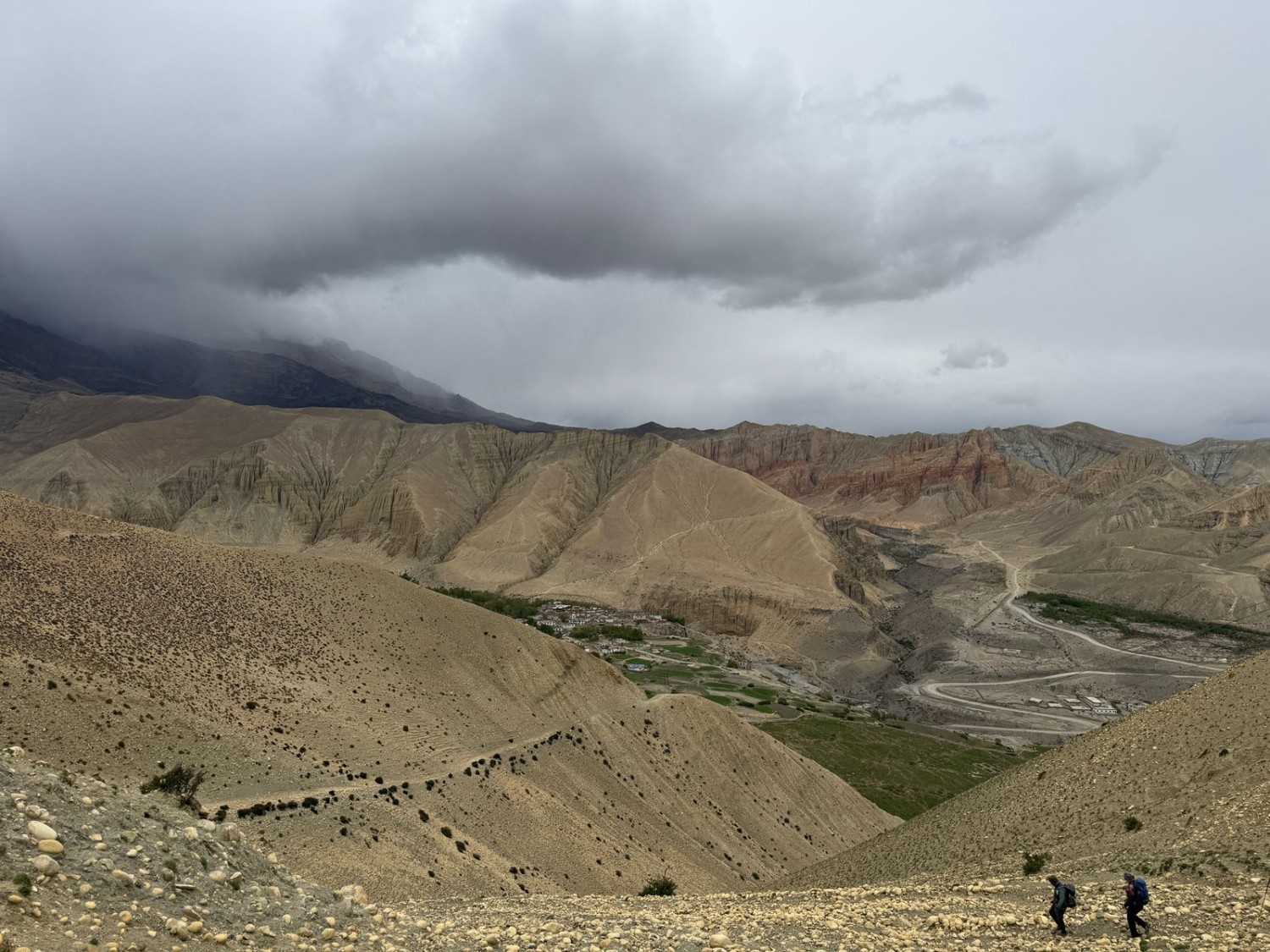
In Nepal, areas north of the Himalayas, such as Upper Mustang and parts of Dolpo, receive very little rainfall because the massive Annapurna and Dhaulagiri mountain ranges block most of the moisture-laden monsoon winds from reaching beyond them. These regions are known as Nepal's rain shadow zones, where the climate remains relatively dry even during the monsoon season.
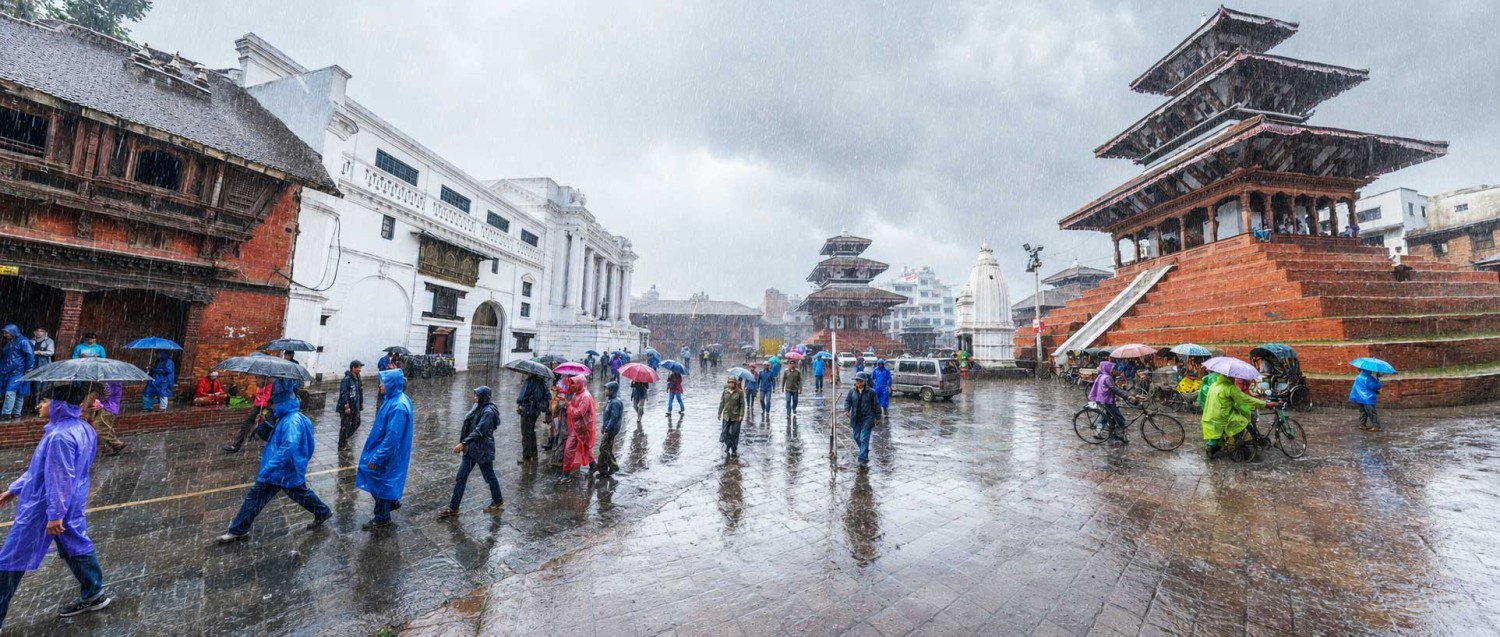
During the rainy season, Nepal experiences regular rain showers, a mix of cloudy and clear skies, and warm to hot temperatures. Because of the country's diverse geography, the climate varies significantly from one region to another. The southern plains of the Tarai remain hot and humid; temperatures often rise to about 40°C (104°F), while the hills and mountain regions enjoy cooler and fresher air.
Even during the monsoon season, there are still many opportunities and good weather window to explore the cities and mountains. On many days, you can enjoy sightseeing, hiking, or other outdoor activities, as rainfall often occurs in the late afternoon or evening, leaving the mornings relatively dry and suitable for travel.
Nepal’s Rainy Season: Stunning Scenery with Seasonal Challenges
The monsoon plays a vital role in Nepal's environment and economy. Seasonal rainfall supports agriculture by providing natural irrigation for paddy and other crops. Rivers, lakes, and groundwater sources are replenished, ensuring water supplies for communities and boosting hydropower generation.
The rainy season also strengthens biodiversity by keeping forests healthy and providing habitats for wildlife. For local communities, the monsoon represents renewal, growth, and the beginning of another agricultural cycle.
Although heavy rainfall can create challenges such as flooding in low-lying areas, landslides in hilly regions and temporary road closures, the monsoon season also offers a unique sense of adventure for tolerant and flexible travelers. By understanding nature, adapting to changing weather conditions, and embracing the journey – especially in the mountains – you can enjoy a rewarding travel experience.
With proper planning, experienced guides, and flexible itineraries, many of these challenges can be managed successfully, allowing you to experience Nepal at its lushest and most peaceful time.
Why Visit Nepal During the Monsoon?
While many travelers wait until autumn to visit Nepal, those who choose the rainy season are rewarded with a quieter, greener, and more authentic experience. During the monsoon, the country's landscapes come alive with lush vegetation, fresh mountain air, and vibrant rural life.
Imagine walking through emerald-green rice terraces after a refreshing rain shower, exploring ancient temples without the usual crowds, or photographing waterfalls at their most powerful. The slower pace of travel allows you to connect more deeply with Nepal's natural beauty and rich cultural heritage. Hotels, trekking routes, and popular attractions are generally less crowded, making for a more relaxed and personal journey. The rainy season is also marked by numerous Hindu and Buddhist festivals, offering visitors a unique opportunity to experience Nepal's living traditions, colorful celebrations, and local customs firsthand.
Immerse Yourself ins Nepal's Vibrant Cultural Festivals Living Traditions
Nepal's cultural festivals are guided by the Lunisolar calendar.
As soon as the month of July begins, the festival season begins. Starting on July 20th (the first Monday of the fourth Nepali month, Shrawan) for the next four each Monday that are on 27th July, 03rd August, and 10th August this year, Hindu women visit Shiva temples and shrines to pay homage to Lord Shiva – the god of transformation, meditation, and renewal, who is widely worshipped as both a protector and the destroyer of ignorance.
There are two highly celebrated Ekadashis – the eleventh day of each lunar fortnight. On 25 July this year, Hindus in Nepal celebrate Hari Shayani Ekadashi when Lord Vishnu (also called Hari) is believed to enter a symbolic four-month yogic sleep (Yoga Nidra) on the cosmic serpent, in the cosmic ocean. Lord Vishnu sleeps for four-month yogic sleep (Yoga Nidra). During these four months, Hindus traditionally avoid marriages, housewarming ceremonies, and other any auspicious events, as Lord Vishnu is considered to be in divine rest. Devotees visit the Budhanilkantha shrine – a magnificent sixth-century stone sculpture of Lord Vishnu in a sleeping pose, as well as other major Vishnu (Narayan) temples.
On 29 August, the Kathmandu Valley will celebrate a festival known as Gai Jatra. Primarily observed by the Newar community – the indigenous people of the Kathmandu Valley – it honors family members who have passed away during the previous year. During Gai Jatra, the streets come alive with colorful parades, traditional music, masked dances, humorous performances, and social satire. For visitors, it offers a rare opportunity to witness Nepali culture through a unique blend of religious traditions, strong family ties, community spirit, and humor.
Kathmandu's week-long festival, known as Indra Jatra or Kumari Jatra, takes place from 23 to 29 September. Dedicated to Lord Indra, the Hindu god of rain and harvest, the festival marks the end of the monsoon season and serves as an expression of gratitude for the rains.
The highlight of the festival is Kumari Jatra, on the 25th September, in which the Living Goddess Kumari – a young Newar girl believed to be the earthly manifestation of the Hindu goddess Taleju (Durga) – is carried/pulled through the ancient streets of Kathmandu in an ornately decorated wooden chariot. Although revered as a Hindu goddess, the Kumari is traditionally chosen from the Buddhist Shakya community, symbolizing Nepal's unique harmony between Hinduism and Buddhism.
The procession begins from the Kumari Ghar (Kumari Palace) and is accompanied by traditional musicians, masked dancers, devotees, and thousands of spectators who gather to receive the Living Goddess's blessings. People in Kathmandu believe that her blessings bring good fortune, prosperity, protection, and good health, making Kumari Jatra one of Nepal's most spectacular and spiritually significant cultural festivals.
Besides these major festivals, Nepal also celebrates Krishna Janmashtami (Lord Krishna's birth anniversary) on 4 September, Kushe Aunsi (Father's Day) on 11 September, Haritalika Teej on 14 September, and many other religious festivals.
Teej is one of Nepal's most vibrant and important festivals for Hindu women. On this day, married women observe a fast and pray for the long life, good health, and prosperity of their husbands and families. They gather to sing traditional songs expressing the hardships of life, pain, sorrow, joy, devotion, love, and others of life, while dancing in colorful red attire before visiting Shiva temples to offer prayers. The most famous celebrations take place at the Pashupatinath Temple, where thousands of women gather to worship Lord Shiva.
Best Monsoon Experiences with Satori Adventures
At Satori Adventures, we carefully design monsoon-friendly itineraries that allow you to experience Nepal safely while making the most of the season.
Our recommended experiences include:
- Cultural sightseeing tours in Kathmandu Valley
- Scenic holidays in Pokhara
- Rain-shadow trekking adventures in Upper Mustang
- Private customized tours based on current weather conditions
As these programs are private and customized, please Contact Satori Adventures today and start planning your unforgettable monsoon journey through Nepal.
Why Choose Satori Adventures?
Traveling during the monsoon requires local knowledge, flexibility, and careful planning. That's exactly what Satori Adventures provides.
When you travel with us, you'll benefit from:
- Experienced local travel experts
- Carefully planned seasonal itineraries
- Professional English-speaking guides
- Flexible scheduling during changing weather
- Personalized travel experiences
- 24/7 local support throughout your trip
We believe every season has something unique to offer, and we'll help you discover the very best of Nepal – even during the rains.
As the Monsoon Ends, Nepal's Best Trekking and Mountaineering Season Begins
As the monsoon season comes to an end in late September, Nepal enters one of its most beautiful and popular travel season viz. Autumn. The rain leaves behind crystal-clear skies, fresh mountain air, and lush green landscapes that create ideal conditions for trekking, sightseeing, and outdoor adventures. Rivers and waterfalls remain full, forests are vibrant, and the Himalayan peaks become more visible, offering breathtaking panoramic views.
Autumn, which lasts from late September to November, is considered the best time to visit Nepal. Pleasant daytime temperatures, stable weather, and excellent visibility make it perfect for iconic trekking routes such as Everest Base Camp, Annapurna Base Camp, Langtang Valley, and the Manaslu Circuit as well as some peak climbing and mountaineering. Cultural festivals like Dashain and Tihar also take place during this period, giving visitors a chance to experience Nepal's rich traditions and celebrations.
Write to us or explore our web page for more programs.