General Overview, Preparation, & Eligibility (Pre-Requisites)
Q. Is Broad Peak Expedition trip suitable for me?
What level of mountaineering experience do I need before attempting Broad Peak? Broad Peak located in the Karakoram range near Mt. K2 is not a beginner’s 8,000 m peak in general. If you lack experience climbing other 7,000 m or even easier 8,000 m peak like Cho Oyu, it is better to wait until you climb others and fully prepared. Broad Peak has long snow ridges with some technical and steep section and also has more technical exposure than Cho Oyu but less technical than other many challenging 8,000ers.
If you are considering climbing Broad Peak, you must first ask yourself several honest questions: Have I climbed enough preparatory peaks before? Am I physically fit enough? Am I technically capable of handling expected terrain and conditions? Am I mentally and emotionally strong enough for the world’s deadliest mountain expeditions?
If you want to gain experience, we recommend you climbing other 7,000 or even 8,000-meter peak in the Himalayas. Strong preparatory choices include Mount Cho-Oyu, Himlung Himal, and others all of which will truly test your endurance, skills, and decision-making ability and prepare for the Broad Peak expedition.
Peak like Broad Peak demands honesty – with yourself first, then with your climbing partners, and expedition organizer. At times during a climb, your life may depend on another person’s awareness and skill, just as their life may depend on yours.
Q: What can be the best motivation of climbing Broad Peak?
Climbing Broad peak is not like summiting Mt. Everest in which you stand on highest point on Earth. Still climbers are drawn to this peak with different motifs. This peak can be a stepping step for Karakoram experience – wilder and harsher weather than in the Himalayas – and can be milestone climb for other 8,000-meter peaks.
Broad Peak climbing is to prove yourself that you can climb 8,000 m peak in Karakoram on your own excellence. And, this climbing provides you experience of unique, crowd-free, and natural mountain climbing. You gain respect as an elite member of mountaineering community and stand a-tall with a lasting legacy in high-altitude climbing.
Q: How difficult is Broad Peak climb compared to other high mountains?
Broad Peak is not really technical peak to climb like other peaks in the Himalayas, and K2 or Gasherbrum in Karakoram. Cho Oyu is generally taken as the least difficult 8,000er of the world and then comes Broad Peak.Mt. Everest is both known for technical climbing and high altitude, whereas Mt. K2 is very steep and technical to climb.
Comparing to other peaks, Mount Annapurna I (8,091 m / 26,545 ft) has higher fatality rate and is considered deadlier due to constant avalanche risk in the Himalayas, while Nanga Parbat (8,126 m / 26,660 ft) is an equally demanding peak that requires elite-level mountaineering experience.
Q: What are pre-requisites for Broad Peak expedition?
Even though peak is said not much technical, climbing Broad Peak – the twelfth highest mountain on earth (8051m/26,414 ft) – requires power of high endurance, both physical and mental skills and strength. Practically, for success and safety, your previous experiences in snow and glacier climbing, ice climbing or even high-altitude climbing experiences in the Himalayas will be beneficial.
But, without previous experiences you can opt for our Guided Broad Peak expedition which is operated with help of world-class Sherpa with your strong mental/physical preparation and trainings. These may include high VO2 max; strong legs, core, and shoulder; decision-making in extreme situations; strong emotional intelligence and judgements; and the positive mindset.
Q: What are other conditions I must meet to join Satori Broad Peak expedition?
Do I need a specialized high-altitude training before joining Broad Peak climb? There are no rules regarding an age limit for the Broad Peak permit set by the government. However, we advise that climbers wishing to join our expedition be at least eighteen years old and possess excellent physical fitness, substantial climbing experience, medically fit, and possesses the ability to tackle a technically challenging high-altitude climb.
Our policy for accepting climbers on the Broad Peak expedition requires prior experience on peaks between 7,000 m or even easier 8,000 m peak like Cho Oyu. We also place great importance on physical fitness, as it ensures safety of climber, their partners, and Sherpa team.
Q: Why is costof Broad Peak expedition pretty high?
Compared to many mountain expeditions around the world, climbing Broad Peak is undeniably expensive. However, for many elite climbers, costis justified by gaining personal mountaineering achievement in the Karakoram.
Several key factors contribute to high cost of Broad Peak expedition:
Government permits and fees: There is significant climbing permit fees, along with additional administrative and environmental charges levied by the Government of Pakistan.
Sherpa and support staff: Sherpa play a vital role on Broad Peak expedition. Number of experienced guides, support staff, and climber-to-Sherpa ratio greatly affects overall cost.
Oxygen and Mask Regulator Systems: Expedition has become safer and more achievable today due to the use of supplemental oxygen and modern breathing apparatus. However, these systems are extremely expensive and contribute significantly to overall cost of expedition. A climber typically uses 4-5 oxygen bottles during ascent, while accompanying high-altitude Sherpa guide generally uses 2-3 bottles. Each bottle costs approximately USD 500-600, including the expense of transporting it to higher camps where each bottle weighs 4 kg.
For safety reasons, we provide at least three sets of masks and regulators, which are shared between climber and Sherpa guide. In addition, spare bottles and emergency oxygen supplies are also carried. All of these –including regulators, masks, backup units, and transportation – add significantly to total expedition cost.
High-quality mountaineering gear: Broad Peak has one of the most demanding environments on the planet, requiring top-grade technical equipment and specialized clothing, which significantly increases expenses.
Transportation and logistics: Getting equipment and supplies to Broad Peak Base Camp is a complex logistical operation. Since area is remote and inaccessible by road, all supplies must be carried by porters and pack animals.
Food and camp facilities: From base camp to higher camps, climbers are provided with specialized tents, cooking equipment, heating systems, and high-calorie meals over several weeks, all of which add to total cost of expedition.
Key Success Factors for a Broad Peak Expedition
Q: Are there any critical components that determine success or failure of an expedition?
Climbing Broad Peak successfully is not a sure-shot thing. There are many components that can determine success or failure of your expedition. Here, we list some noteworthy components based on our experience so you can prepare yourself for success accordingly.
- Personal physical and mental fitness as well as previous climbing experiences
Physical fitness, mental strength along with proper handling of emotional intelligence are among the most critical components of a successful Broad Peak expedition. Strong cardiovascular endurance, exceptional mental resilience, ability to manage emotions under extreme conditions, and prior experience of climbing above 7,000 m technical mountains are the most essential.
- Personal climbing Equipment
Broad Peak expedition is an extreme high-altitude undertaking that demands only highest quality, expedition-grade equipment. Using tested, reliable gear increases safety and overall comfort in some of the harshest conditions on Earth, while cheap or untested equipment can lead to serious risks, equipment failure, and even life-threatening physical injuries. We provide high-standard, field-tested gear along with all necessary backups from our side, and we strongly advise you to arrange equally reliable equipment personally. Please review our equipment list page [Link to equipment page] carefully and read equipment related sections to ensure you are fully prepared for your Broad Peak expedition.
- Weather conditions and Timing
Weather conditions at high altitudes, such as on Broad Peak, can change within minutes. And, the most importantly, mountain does not take your personal ambition or dream into account. Karakoram is even serious than the Himalayas in terms of harshness and wilder weather conditions.
However, we can handle this critical component carefully to enrich chances of successful expedition. It is equally important for you to understand mountain environment, and remain flexible, as safety must always take precedence over summiting.
- Personal climbing Sherpa guide and their experiences
Sherpa guides are backbone of mountain climbing now in the Himalayas and Karakoram. Their role is critical to success and safety during Broad Peak expedition. Sherpa guides possess unmatched high-altitude experience, deep knowledge of mountain’s terrain, skills to navigate hazardous conditions and sudden weather changes in the mountain. Their experiences and expertise in pacing, acclimatization management, oxygen management, building rope systems combined with their emotional and moral support in extreme conditions, significantly enhances both safety and success rate of your Broad Peak expedition.
- Your expedition operator’s ability and experiences as well as enough resource management
Proper organization is critical for success of Broad Peak expedition. From designing a detailed and proper itinerary, controlling pace to implementing effective acclimatization plans must be carefully managed. Ensuring the use of high-quality gear, accurate weather forecasts, and robust logistics for food, tents, oxygen, and permits is essential to be in order for success. Furthermore, employing highly experienced and well-trained Sherpa guides, along with maintaining proper climber-to-Sherpa ratio, plays a vital role in maximizing expedition’s success. At Satori Adventures, we are absolutely aware of these requirements and are deeply committed to providing meticulous planning and support.
Choosing the Right Broad Peak Expedition Company (Why Satori Adventures)
Q. How can I find an experienced and trustworthy climbing service provider for Broad Peak expedition?
There are hundreds of companies around the world that organize – or claim to organize – Broad Peak expeditions. Among them, choosing the right Broad Peak guiding company is an arduous task – especially for high-altitude, and in one of the toughest scenarios.
When selecting a reliable Broad Peak expedition operator, you should consider factors such as its safety record and success rate with transparent statistics; quality of Sherpa leadership and staff support; ethics and sense of social responsibility; and professional handling of the trip from preparation to completion. We choose the best Pakistani counterpart for pernit, documentation, and logistics issues through our extended experiences in the Himalayas and Karakoram. We are unquestionably one of the trusted Broad Peak expedition operators for decade.
Q: Why I choose Satori Adventures for my dream expedition of Broad Peak?
We are an expedition operator from Nepal operating high-altitude expeditions in Nepal Himalayas and Karakoram for last eighteen years. Today, Sherpa are the most trusted expedition guides in the Karakoram including Broad Peak. And, we have large pool of world renowned Sherpa guides born and raised in the Himalayas, and extensive knowledge in Karakoram range with their long experience.
We do not simply “fill” expedition spaces; instead, we focus on forming a team of compatible climbers who show strong integrity, honesty, and trust in one another. We work on our philosophy of “High Success and High-Safety”.
Among hundreds of companies, only about 30 companies operate expeditions on 8,000m peaks on a regular basis from Nepal, and we are proud to be one of successful high-altitude peak expedition operators. We have run successful Broad Peak expeditions year after year. We choose the best counterpart for our logistics and documentation in Pakistan.
The company and expedition both led by an experienced mountaineer and industry leaders. Satori Adventures MD has been appointed as the Board Director of Nepal Tourism Board for the term (2024-27) honoring his contribution to tourism industry and elected General Secretary of expedition Operators Association - Nepal (EOA-Nepal) for the term (2023-27). You can find more information about our services, Sherpa support, logistics, management, and more in the following sections.
Q. Who will be expedition team leader, my personal climbing Sherpa guide and what are their experiences if I choose Satori Adventures for my Broad Peak expedition trip for 2026 or 2027?
Expedition team leader who will lead you the summit of Broad Peak is highly experienced, well-qualified, and have been working with us tirelessly for decades. Most were born in high-altitude regions of the Himalayas and have spent their lives above 4,000 meters, which gives them unparalleled altitude adaptation and mountain knowledge.
Our expedition leaders have at least one or two Broad Peak summits and few rope fixing experience with strong high-altitude guiding experience on other 8000 m peaks, and excellent safety records. They possess deep knowledge of weather patterns, route management, and rescue procedures, along with strong leadership and communication skills. They are well-known in the mountain community for their excellent coordination with other expedition companies and are highly respected figures in mountain tourism. Their professionalism, patience, and respect toward every climber make them among the most trusted leaders on the mountain. They also have exceptional expertise in rope fixing and route opening, ensuring maximum safety and efficiency throughout expedition.
Your personal Sherpa guide who assist you are certified mountain guides through the Nepal Mountaineering Association (NMA) and Nepal Government, with advanced mountaineering training from NMA and other related trainings from Trekking Agencies Association of Nepal (TAAN) and Nepal Academy of Tourism and Hotel Management (NATHM). Some of our guides are also certified through the International Federation of Mountain Guides Associations (IFMGA). Every Sherpa leader and guide holds a valid Nepal Government license, Mountaineering Association accreditation, and official summit certificates. In addition, we provide extensive training to our Sherpa guides in technical mountaineering, English communication, customer service, and Wilderness First Aid, ensuring they are fully prepared to offer highest level of safety and support on your Broad Peak expedition.
Most importantly, your Sherpa Guide already have three summit achievements on 8,000m peaks in the Himalayas or in Karakoram before we assign them to Broad Peak expedition as a guide with you. You can find detailed profiles and accomplishments of our Sherpa guides here: [Link to Sherpa Staff page].
Satori Adventures Broad Peak Expedition Safety Measures, Medical Support & Success Rate
Q: What is safety and success rate of Satori Adventures in the Broad Peak ?
Satori Adventures has maintained a 100% safety record on Broad Peak expeditions to date, although we all know that complete safety can never be guaranteed in high-altitude mountaineering. This achievement is again the result of meticulous expedition planning, highly experienced Sherpa guides and their expert judgment, well-structured acclimatization schedules, up-to-date weather monitoring from reliable international services, small group sizes – limited to maximum of fifteen climbing members in a group – with personalized support, and follow strict safety protocols.
In addition to our impeccable safety record, Satori Adventures has one of highest success rates on Broad Peak expeditions, currently standing at 85-90%. Climbing Broad Peak is an extreme high-altitude adventure where every decision can be a matter of life and death. We strive continuously to maximize success rate of our Broad Peak expeditions.
We provide a consistently higher Sherpa/Guide ratio to climber – i.e. 1:1 ratio – better to other operators. Additionally, for safety and logistical reasons, each team is supported by one experienced Nepali expedition leader and one additional guide. This means that for every 7-8 climbers, there are ten highly trained Nepali climbing guides in total, ensuring maximum support, safety, and personalized assistance throughout expedition.
Our lead guide is always equipped with a satellite phone during climbing and at the base camp that enables a two-way radio communication between climbing members, guides, Sherpa and base camp staff.
Q: What safety measures are taken throughout expedition?
And, how is my health monitored at Base Camp and on the mountain? First and the foremost safety measure in high-altitude expedition is highly experienced and well trained Sherpa guide we put for your expedition. They can monitor conditions properly and have an excellent decision-making capacity in extreme situations. Our expedition program includes proper acclimatization so the risk will be lesser naturally. We back up emergency equipment such as supplemental oxygen, first-aid kits, communication devices properly. Your health from Base camp to higher camps will be monitored through pulse oximeters, and symptom tracking to detect altitude-related illnesses. And, we have proper rescue-evacuation plan.
Moreover, selection of camps on the mountain is a critical part of our safety precautions. We set up all Camps generally in safer areas.We give utmost attention to every safety measure throughout your expedition supported by our experienced Sherpa guides and staff.
Meals, Logistics, Accommodation During Satori Broad Peak Expedition
Q. What sort of meals Satori Adventures serves for expedition?
In Islamabad and Skardu you stay in the hotel and enjoy meals provided at the hotel. From Askole, we use camping accommodation and provide you high standard meals. You will enjoy nutritious, well-balanced meals – one of the most important components of summit success – prepared by our chef. We provide high calorie meals with all essential components: carbohydrates, protein, and fats – ensuring your stay energized throughout your climb.
We plan proper diet at higher camps (above 6,000 meters) where digestion slows and food varieties are limited. If you have any dietary concern, we take this into serious consideration and request you to inform us in advance.
Q: What type of food can I expect in the Advance Base Camp? And, for higher camps?
As we have a trained and experienced high altitude expedition cooks, they serve you scrumptious, nutritious, and healthy food. We use fresh vegetables whenever possible and have an extensive culinary repertoire. You are in fact encouraged to request your personal favorites to maintain good appetite and ensure you get enough calories.
At higher camps we use freeze-dried packaged foods sourced from the USA or UK. These foods are high-quality, flavorful and easy to prepare at higher altitude. Your personal climbing Sherpa will melt sufficient ice for hot water, tee, coffee and a variety of juices. Different flavors of tea, coffee, snacks, juice and hot water will be available 24 hours a day ensuring you stay nourished and well hydrated throughout your expedition.
Q. What personalized services I can expect from the Satori Adventures? Will someone pick me up from the airport?
Yes, Satori Adventures’ representative will pick you up from Islamabad airport. Before you meet our representative, you are required to collect your luggage, clear immigration and customs, and proceed to arrival terminal. We then transfer you to the Hotel, and all other services included as per agreed itinerary.
Q: Is climbing permit included in Satori Adventures’ Broad Peak expedition package cost?
Who arranges my climbing permit? Yes. Climbingpermit is included in the package cost and Satori Adventures in coordination with Pakistan adventure company will arrange permit.
Health Issues, High Altitude Illness (AMS, HAPE, HACE) during Broad Peak Expedition and Prevention
Q: What types of health problems can arise during my Broad Peak expedition?
At high altitudes, your cardio-pulmonary system is affected by low oxygen levels. This can lead to general breathing difficulties and Acute Mountain Sickness (AMS) – the first stage of altitude sickness – in which headache, fatigue, nausea, and vomiting can occur. And, it is manageable through slow pace ascent, proper acclimatization, maintaining a balanced diet, and hydration.
If left untreated or pay less attention with carelessness, AMS can progress to High-Altitude Cerebral Edema (HACE), caused by brain swelling, or High-Altitude Pulmonary Edema (HAPE), which is a fluid buildup in the lungs. Both HACE and HAPE are life-threatening conditions that require immediate medical attention.
Other risks at high-altitude expedition include sunburn and snow blindness. Intense UV radiation at high elevations can damage skin and eyes. Using sunscreen, wearing appropriate clothing, and protecting your eyes with sunglasses with category 4 lenses – especially on glaciated terrain – are essential precautions.
Apart from these issues, at high altitude you may feel full quickly or experience a loss of appetite. Changes in altitude, diet, food and water, and food intake timing can sometimes cause your stomach to become cramped or bloated. At higher elevations, bowel movements tend to slow down, resulting in slower digestion. Increased physical strain combined with altitude and a carbohydrate-heavy diet can also lead to acid reflux or heartburn. Since we are responsible for your meals, we take the utmost care in food preparation and hygiene to protect your health and minimize any food-related issues.
Q: Can you explain more about Altitude Mountain Sickness (AMS) and others illness in detail, so I know what to pay attention to?
AMS occurs when body reacts to a decreasing amount of oxygen in the bloodstream at high altitude. It commonly develops above 3,000 meters (9,800ft) above sea level, though susceptibility varies between individuals. There is no reliable way to predict personal sensitivity before exposure, and previous experience at high altitude does not guarantee immunity. Higher cardiovascular fitness may reduce vulnerability to AMS.
As altitude increases, the oxygen density in the atmosphere decreases, meaning body receives less oxygen. This leads to a reduced partial pressure of oxygen, creating a difference between external and intercellular oxygen levels, which makes it harder for the body to function normally.Symptoms of AMS are mild and subside with rest and hydration, or descending some 400 meters. However, if ignored, AMS can progress to serious conditions, including death.
The symptoms of AMS can appear within 1-2 hours of ascent, but most often occur 6-10 hours after climbing. Mild symptoms generally subside within 1-2 days as the body acclimatizes, and they may reappear as altitude increases.
Common AMS Symptoms:
- Headache
- Shortness of breath
- Loss of appetite
- Fatigue
- Nausea or dizziness
- Rapid pulse
- Disturbed sleep or drowsiness
- Irritability
- Swelling of hands, feet, or face
- Vomiting
Severe AMS Symptoms:
- Bluish discoloration of skin (cyanosis)
- Chest tightness or congestion
- Confusion
- Cough (sometimes with blood)
- Decreased consciousness or withdrawal from social interaction
- Grey or pale complexion
- Inability to walk in a straight line, or inability to walk at all
- Shortness of breath at rest
If the body is unable to adjust, AMS may progress to High-Altitude Cerebral Edema (HACE) or High-Altitude Pulmonary Edema (HAPE). Edema refers to fluid accumulation in body tissues. Both HACE and HAPE can be fatal if untreated.
Symptoms of HAPE (fluid in the lungs):
- Breathlessness
- Dry cough progressing to a wet cough with blood-tinged sputum
- Chest tightness
- Blueness of face, lips, and tongue
- Low-grade fever (up to 38°C / 100°F)
- Severe fatigue, progressing to coma
Symptoms of HACE (fluid in the brain):
- Severe headache not relieved by painkillers or lying down
- Confusion, disorientation, and drowsiness
- Nausea or vomiting
- Loss of balance or coordination
- Blurred or double vision / retinal hemorrhage
Q: How can I prevent AMS, if possible?And, any treatment available?
Certain medical conditions (such as respiratory disease) or medications (such as sleeping pills) can increase the risk of altitude sickness. It is important that you inform us in advance or your guide of any medical conditions or medications before ascending to altitude. You can help your body acclimatize and reduce the risk of altitude sickness by:
- Avoiding alcohol, tobacco, and other similar substances that can interfere smooth flow of oxygen to the body and brain
- Eating small, frequent meals that are high in carbohydrates
- Drinking plenty of water. A good test of proper hydration is the ability to produce clear and colorless urine
- Take it easy and have a rest. Nap when you can. Walk at a slower pace than you would at sea level and avoid over-exertion
- Climb gradually and take one to two rest days for every 600m of ascent above 3,000 m.
- Sleep at a lower altitude when possible
- Learn how to recognize early symptoms of mountain sickness
Basic treatment:
By following guidelines given above, most climbers acclimatize successfully. The best way to treat AMS is to descend to a lower altitude, adjust the ascend pace, enhance food intake, rest, and stay well hydrated. Early diagnosis of AMS is crucial, as it is easier to treat in initial stages. Our Sherpa guides are trained in recognizing, preventing, and responding to AMS symptoms. Your Sherpa guide will monitor you at all times for any signs and symptoms, and you are responsible to reporting any changes honestly and promptly.
If necessary, your guide may suggest an extra rest day, a descend to a lower altitude or use of medication such as ibuprofen, paracetamol, or specific AMS medication. Acetazolamide (Diamox) is a common and effective medication that may be used to improve breathing and reduce mild symptoms. You should drink plenty of fluids and avoid alcohol while taking it.
In severe cases of AMS, your guide will make necessary arrangement with us for evacuation. Before joining the trek, we require that you purchase/submit comprehensive travel insurance that includes coverage for entire medical treatment, helicopter rescue and hospitalization.
Emergency Situations and Evacuation Scenarios
Q: What if I get sick or injured – can I continue after recovering?
What happens if a team member or climbing partner becomes sick – does it affect my climb? We wish that such a situation will not occur during your expedition. However, if you become ill during your acclimatization cycle, or while at Base Camp, Camp I, or Camp II you can opt for recovery either at Base Camp or in specialized hospital in Skardu – the closest hospital facility near Broad Peak. If you return to Skardu for a detailed medical check-up and treatment, and doctor recommends that you are fit to continue, you may rejoin expedition within valid climbing permit period. All additional costs of these types are excluded in our package cost, and under your own responsibility.
Your climbing schedule and summit attempt will not be affected by illness or inability of other team members. You are free to continue your guided ascent of Broad Peak as per your plan.
Q: What happens if my Sherpa guide gets sick during expedition?
At Satori Adventures, your safety and smooth climb are our top priorities. If a Sherpa guide gets sick or is unable to continue at any point during expedition, we will immediately replace him/them with one of additional Sherpa guide(s) in the team. We also maintain a pool of highly experienced backup Sherpa guides who can step in at any time. This ensures that each climber continues to receive personalized 1:1 support during summit attempt.
Even in the case that an issue arises during the summit push, expedition leader can act as your personal climbing Sherpa guide. This is main reason why we always include 1–2 additional Sherpa guides beyond the number required, to ensure safety, support, and flexibility throughout expedition.
Q: Is helicopter rescue and evacuation service available? How will it be arranged?
Due to serious planning of Itinerary, expert guiding by Sherpa in high-altitude, and utmost attention to safety, rescue services are required very minimal.Still, high-altitude climbing is unpredictable in relation to risk. So, Satori Adventures, recommend that our customers have comprehensive insurance that covers medical treatment, evacuation, and high-altitude rescue during expedition.
In the unlikely event of an emergency, helicopter rescue is available on the Broad Peak at Base Camp. In higher altitude rescue through long-line is available in serious rescue requirements through Pakistani Army service. A rescue service on Broad Peak depends upon weather condition as well. We Satori Adventures will coordinate with relevant authorities to ensure timely rescue and evacuation if needed.
Q: What risk and hazard mitigation measures does Satori Adventures have in place during my trip?
In a mountainous region of Karakoram, there is always a potential risk of natural disasters such as unexpected rainfall, heavy snowfall, severe storms, avalanches, flooding, landslides, and earthquakes. We are aware of these risks and have developed comprehensive emergency and evacuation procedures to ensure your safety on our expeditions. These includes backup communication devices to contact our support office in Pakistan, our office in Kathmandu and respond promptly in any emergency situation.
In the event of road blockages caused by major landslides or earthquakes, we will evacuate expedition members by helicopter as far as possible. Such evacuations are considered emergency evacuations due to force majeure, and costof helicopter rescue and other evacuation costs must be covered by your travel insurance.
Insurance Requirements for Broad Peak Expedition
Q: Is high-altitude and evacuation insurance mandatory?And, what sorts of insurance should I purchase?
Yes, having a good travel/ climbing insurance with wide coverage is essential while attempting a mountain peak like the Broad Peak. Your small investment in insurance can save you from very high costs in the future. As this expedition involves high-altitude conditions, the risk of hazards is significantly higher. Proper insurance coverage thus can protect you from any unexpected financial or medical burdens in the future.
Your insurance should include high-altitude medical coverage for altitude related illness such as Acute Mountain Sickness (AMS), High-Altitude Pulmonary Edema (HAPE), High-Altitude Cerebral Edema (HACE), and other possible injuries like frostbite, fall etc. The policy must cover altitudes of 8,000m or higher.
Emergency evacuation, including helicopter rescue, must also be incorporated in your insurance policy. We generally advise a minimum coverage of USD 25,000 for evacuation and rescue services. And, remember that helicopter evacuation can be done from the Base Camp in most cases and in rare occasions from higher camps.
Furthermore, your insurance should also include repatriation to your home country if required (this is not mandatory and entirely up to your preference). Besides these, your policy may cover costs of loss, delays, cancellation of services etcetera.
Q: Where can I obtain my travel insurance?Do you have any recommendations?
It is important to arrange your travel insurance in your home country before departure. When purchasing a policy, ensure that it provides reliable services on timely manner, including emergency evacuation via fully equipped medical transportation. Some insurance companies may not have efficient communication channels in Pakistan or in high-altitude regions, which can delay response times in emergency situations. So check their support system and local agency presence.
Additionally, note that classification of emergency situations may vary between insurance companies. So, make sure that you are well-informed of their policies. Though, endorsing any specific company is not our policy, to the best of our previous experience and knowledge, Global Rescue is considered a reliable option.
Broad Peak Expedition Gear and Equipment List
Q: What essential personal equipment do I need to prepare?
We have listed detailed expedition equipment list on a separate page [Link to equipment page]. If you still have questions after reviewing the list, please feel free to contact us at [info@satoriadventuresnepal.com or via Link to Whatsapp
We recommend purchasing high quality down jackets, fleece layers, and Gore-Tex from reputable brands such as the North Face, Ozark, Marmot or others you trust. We recommend that you use sport millet or La-sportiva high-altitude climbing boots for the Broad Peak expedition.
You will need technical climbing gears such as Climbing Helmet, Ice-axe, Crampons, Alpine-style Harness (e.g. Black Diamond Alpine Bod), Ascender (Jumar), Rappel (descender device), minimum of four Carabiners (two locking and two non-locking), four Prussic loops (two long and two short) etc.
Our experience shows that a two sleeping bag system works best for 8,000 meter peaks like Broad Peak. One sleeping bag is used and kept at Base Camp rated between -20°C to -25°C (-4°F to -13°F). And, the second bag used at higher camps should be rated -30°C to -40°C (-22°F to - 40°F). We strongly recommend that your sleeping bags made of down, not synthetic materials, for better insulation in extreme conditions.
Q: What is the approximate cost of purchasing climbing gear for a Broad Peak expedition in 2026?
Cost of gear depends on its quality. For premium, expedition-grade equipment, the total cost can range from USD 10,000 to USD 15,000. This typically covers items such as a summit down suit (for extreme cold), high-altitude boots, sleeping bags (for both Base Camp and high camps), a sleeping pad or mat, multiple layers of clothing, and various technical items – including a harness, helmet, ice axe, crampons, carabiners, belay devices, ascenders, and other essential personal items.
Q: And, can I rent or hire equipment instead of buying?
As we mentioned earlier, personal climbing gear is one of the most critical components for success of your expedition. And, Broad Peak is an extreme high-altitude expedition, which demands highest quality, expedition-grade equipment.
By renting gear may reduce upfront costs compared to purchasing your own high-quality expedition-grade equipment. But, rented equipment can often be outdated, heavily used previously – that can be unhygienic, uncomfortable – or of low-quality. This can compromise safety in extreme conditions – potentially resulting in life-threatening risks. Remember that, in Pakistan, renting is not easily available of high-quality gears like in Kathmandu Nepal.
For these reasons, we strongly recommend that climbers make a careful and informed decision regarding their personal expedition equipment, prioritizing quality, fittings, and reliability for a safe and successful climb.
Q: Does Satori Adventures provide sleeping mat for Base Camp, Advance Base Camp, and high camp?
Satori Adventures will provide a thick, high quality pad for use at Base Camp and Advanced Base Camp. But, above to this, you will need to bring your own sleeping pad. Foam pads generally work best, although some climbers prefer air mattresses.
Q. Who will carry climbing equipment above Base Camp?Do I have to carry my own gear?
Level of support you receive on Broad Peak expedition depends on type of service you choose from Satori Adventures.
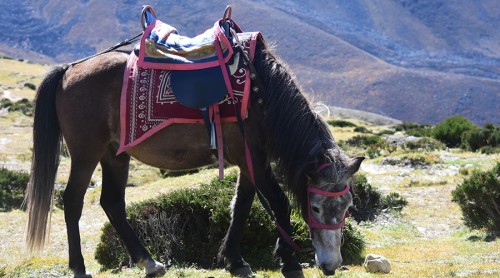
We utilize multiple transport methods – including trucks or jeeps – followed by Mules or porters to deliver supplies to the Base Camp and Advanced Base Camp.
When you choose our fully-guided full-board Broad Peak expedition service, all logistics are managed by our team. In our full-board Broad Peak expedition service, porters may assist to carry your personal gears to higher camps, while your dedicated personal Sherpa guide (1:1 ratio) ferries basic logistics, sets up tents, and prepares high-altitude meals at Camps I, II, and III as required.
From Camp III onward and during the summit push, you are required to carry essential items such as oxygen cylinders including two in numbers, 2-3 liters of water, chocolates and other dry meals, and back-up masks, approximately 15 kilograms. For this reason, we advise that you carry personal gear from Base Camp to higher camps to aid acclimatization and adapt to carrying weight at high altitude.
If you prefer not to carry your personal gear and want a Sherpa to help you, you may hire an additional Sherpa, which currently costs approximately USD 10,000. If you opt to share a climbing Sherpa among other fellow climbers instead of 1:1 ratio, you will be expected to carry some logistics to higher camps from the Base camp. And, while choosing Base Camp logistics service only, you are responsible for carrying your own food, equipment, tents, and other necessary items.
Q: What happens if my luggage or gear is lost or delayed before expedition?
There are several trekking days before you begin actual climb, and during this time, we will transfer your luggage to Base Camp. In the unlikely event of a significant delay or non-arrival of your luggage, you may need to purchase gears for your climb. There is equipment available in Skardu, Islamabad, and Rawalpindi in Pakistan to purchase. But, there may not be of highest-quality, and quantity to select the best fit. So, you pay extra attention to bring your luggage, and you should ensure that your luggage and gear are fully covered by insurance.
Oxygen Use and Backup Systems on Broad Peak
Q: How many oxygen bottles are generally used during the summit bid?
And, what backup options will I have if my oxygen system fails? Depending upon individual needs, weather condition, climbing speed, route traffic and other conditions, you may use four to five bottles of supplemental oxygen. You may start to use supplemental oxygen from Camp III at 7,100 meters (about 23,294 ft) or bit further up or below as your stamina shows.
We pay optimum attention that your oxygen apparatus works efficiently while planning. You get two pairs of mask and regulator each for back up use. Moreover, our Sherpa are highly experienced and well-trained to handle emergencies. We always have a backup oxygen bottle and apparatus with our Sherpa, and in emergency they will share their oxygen with you to keep you safe.
About Broad Peak Expedition, Route, and Climbing program
Q: How unpredictable is Broad Peak weather, and how does it affect the climb?
Due to its height, location, and geological features, Broad Peak has complex atmospheric and climatic processes. Broad Peak is located in a region where multiple weather systems converge, including Central Asian weather patterns, South Asian monsoon, high-altitude atmospheric conditions, and the jet stream. The interaction of these systems makes environment extremely harsh and potentially life-threatening.
On Mount Everest, the jet stream typically shifts away in a relatively stable and predictable manner during the May–June climbing season. On Broad Peak, however, the jet stream often does not move away and may remain directly overhead, bringing hurricane-force winds across extremely exposed terrain. This makes both climbing and rescue operations problematic.
There is a very limited weather window for climbing Broad Peak. Even during this period, conditions can deteriorate rapidly and without warning. To ensure safety, our expert guides continuously monitor weather forecasts and mountain conditions, and plan summit attempts only during short “weather windows” when conditions are most favorable. In extreme situations, you must always be prepared to retreat, as turning back can be essential for survival.
Q: What happens if weather window closes during the summit push?
How many days might we need to wait for a safe weather window? In the event of unfavorable weather during a summit push, you wait at lower camps for a suitable weather window. If conditions remain unsafe and unfavorable weather for an extended period, the only option is to retreat and abandon the climb to ensure safety.
There is no fixed waiting period, as the timing entirely depends on the mountain’s unpredictable weather patterns. Your guide, in consultation with company, advanced weather forecast, and fellow Sherpa guides on the mountain, will make a careful and informed decision regarding the summit attempt.
Q: How cold does it get during expedition and near the summit?
Broad Peak is known for its extreme cold as well as its high altitude. You can expect temperatures at Base Camp to range from around -10°C to -15°C (14°F to 23°F), and from -25°C to -35°C (-13°F to -31°F) at Camp III during the night. At the summit of Broad Peak (8,051 m/ 26,414 ft), temperatures can range from about -40°C to -50°C (-40°F to -58°F), depending on the time of day. However, summit winds, which averages at 60-90 km/h (37–56 mph) can make it feel extreme colder.
Climbing Broad Peak is challenging not only because of high altitude but also due to its notoriously cold and harsh weather conditions. Therefore, we strongly recommend that climbers carry proper high-altitude equipment and clothing.
Q: What does Broad Peak Expedition itinerary for 2026 look like?
Please refer to the Itinerary page for this information. We do not have separate itinerary or plan for the year 2026. Please refer to our Itinerary page [Link to itinerary] for detailed information.
Q: How long do I stay at Base Camp and what does acclimatization rotation look like before beginning the summit rotation?
When you arrive at Base Camp, you prepare for acclimatization and may rest. Meanwhile, our staff will set up camps gradually. Our Sherpa staffs may perform a small Pooja ceremony – customary Sherpa ritual to beg pardon for climbing holy mountains, and seek blessings of safe passage to summit – at Base Camp. It is though not as official as in the Everest Base Camp, and some Muslim staffs from the region may offer prayers on their own way.
At the beginning of your trip, you fly from Islamabad to Skardu (2,230 m/7,316 ft) and then start your trekking from Askole (3,000m / 9,843ft) to the Broad Peak Base Camp after few hours’ drive. You gradually trek and spend a spare day at Paiyu (3,600m/10,498ft) for acclimatization and reach to Broad Peak Base Camp at 5,300m.
It takes about ten days to reach Base Camp and you acclimatize initially during this. And, from Base Camp your acclimatization rotation begins.You may spend few days (5-7 days) at the Base Camp. During this period, you train yourself in the new terrain, rest, hike to the glacier, ridges, and prepare for climbing. In the first rotation of acclimatization, you climb from Base Camp to Camp I at 6,000 m (19,685 feet) and may stay overnight or choose to return back to Base Camp. You may take 3-4 days for this ascending and descending activities.
After couple days of rest at Base Camp, you are now ready for Camp 2 at 6,500m (21,325 ft). You can stay one or two nights in C2 and return to Base Camp. Or climb to Camp 2 and sleep at Camp I.
In the next rotation, you reach to Camp 3 at 7,100 m (23,294 ft) where you may not stay but just touch and return to Base Camp.
After all these acclimatization cycle, you are now ready to plan for the dream at the Base Camp. You wait and monitor weather window. Plan for the summit.
Q: How typically it looks like climbing and summit rotation?
While you are busy with acclimatization rotations mentioned earlier, our Sherpa guides will pitch Camps I, II, and III and gradually ferry gear, equipment, and food to higher camps. You will routinely climb to higher camps and return to Base Camp to sleep, or occasionally spend another night at a higher camp. This process continues until the summit rotation begins.
Once you complete your acclimatization rotations, you may spend 7-10 days recovering at Base Camp. When you are fully acclimatized, well rested, and a favorable weather window is forecast, the summit rotation begins. You will move progressively through Camps I to III, following established routes, before making final push to the summit of Broad Peak.
From Camp III, you climb in hard packed snow and ice in a 35-40° slope to reach the summit ridge at 7,400 -8,000 m. Here, the terrain is narrow and exposed. And, reach to the summit with small steep climb where you may spend 5-15 minutes on the summit before beginning your immediate descent, usually returning to Camp III.
Q: How long does entire Broad Peak expedition usually take?
Our Broad Peak expedition 2026 itinerary is designed for 52 days in total. You should also allow an additional 2-4 days for international travel to and from Islamabad, depending on your location and flight availability. So, it makes about 55-56 days’ trip.
Out of 52 days, around 29 days are spent at Broad Peak Base Camp and higher camps for climbingand acclimatization phases. The remaining time is allocated for trek to Broad Peak Base Camp, essential pre-expedition preparations, and post-climb rest and shopping before your departure.
This extended schedule is carefully designed to provide proper acclimatization, flexibility for weather delays, and a safer summit attempt on Broad Peak.
Q: What is the best climbing season for Broad Peak in 2026, and why?
The main climbing season for Broad Peak is summer – from late June to August. The month of July is generally considered the best, offering highest chances for a summit window, as the jet stream and monsoon tend to align, reducing high-altitude winds. In early August, there may still be a few favorable weather windows.
During summer, the Karakoram experiences more stable weather. Days are longer, providing extended daylight hours for climbing. At this time of year, wind speeds are generally lower, and temperatures are relatively warmer, making conditions slightly more favorable for high-altitude climbing.
Q: Why isn’t Broad Peak climbed in other seasons besides spring?
Other seasons besides summer are not feasible for climbing Broad Peak because weather is extremely harsh. In winter, temperatures drop as low as -60°C or lower. Moreover, extreme winds that may exceed 200 km/h (125 mph) add to the challenge. Snowstorms are far more frequent during this season, and shorter daylight hours provide limited time for climbing and descending. Even highly experienced climbers can struggle to find a suitable weather window in winter and other seasons.
Outside summer season, logistical support is also limited compared to summer, making expeditions even more difficult.
Cost of the Broad Peak expedition for 2026, Booking and Refunds
Q: What is included in expedition cost, and how much additional money should I budget for personal and unforeseen expenses?
Under the Costs section [Link to the costs page], you can find full details of what is included and excluded. If you have further questions, please contact us at info@satoriadventuresnepal.com or send a WhatsApp message .
There are other personal expenses to consider during your trekking and climbing. Tips for Sherpa guides and support staff are an important part of these extra costs. Based on our experience, you may budget around USD 8,000 -10,000 for personal and unforeseen expenses. This includes:
- Tips and summit bonuses for Sherpa and other staff
- Internet and communication
- Personal food, snacks, and beverages
- Emergency and contingency fund (recommended USD 2,000)
Planning ahead for these expenses helps ensure a safe, comfortable, and well-prepared Broad Peak expedition.
Q: How do I book my Broad Peak expedition for 2026 or 2027?
Once you complete filling the booking page with related information, you are requested to send us scanned copy of passport and printable JPEG format photo for permits. You may provide us your travel itinerary once fixed. 30% deposit will be required at the time of booking, and rest you pay prior to your trip commencement date. For, more information on booking, payments, and cancellation policies including other conditions, visit our Terms and Conditions page.
Q: What happens if I cannot continue expedition, is any refund possible?
There are different refund policies of Satori Adventures depending on different conditions. Please read our Terms and Conditions for detailed refund policy.
Other Issues
Q: Do I need to join a group or can I climb solo?
There is no any legal provision to climb Broad Peak either in a group or solo. However, climbing solo is generally extremely expensive and less safe. Our expeditions are group-joining, with carefully organized logistics and the support of highly experienced, well-trained, and reputable Sherpa guides to ensure a safe and successful summit experience.
Q: Do I need a visa to enter Pakistan? How can I obtain?
For the Broad Peak expedition, you need a specific Mountaineering and Trekking visa which works to entry into Pakistan as well. But other tourist visa would not be sufficient to enter into the northern restricted area in Gilgit-Baltistan region.
To obtain this visa, we require documents like: valid passport with minimum 6 months’ validity; recent passport-sized photographs; medical fitness certificate from certified physician; mountaineering insurance coverage certificate; and previous mountaineering experience certificates.
You may confirm the trip well in advance with proper planning, and send us booking and documents well in advance - two to three months before departure. We apply online via https://visa.nadra.gov.pk/mountaineering-trekking/ on your behalf or by yourself and get pre-approval.
Or, if you prefer to obtain your visa physically from the nearest Pakistani diplomatic mission, we can send you required invitation and documents.Besides visa and entry permit, we obtain other permits like climbing permit. And, Pakistan has country specific restrictions and regulations. So, visit above given website for more information.