Satori Adventures Everest and Lhotse Expedition Spring 2026: From Months of Meticulous Planning to Historic Summit Success
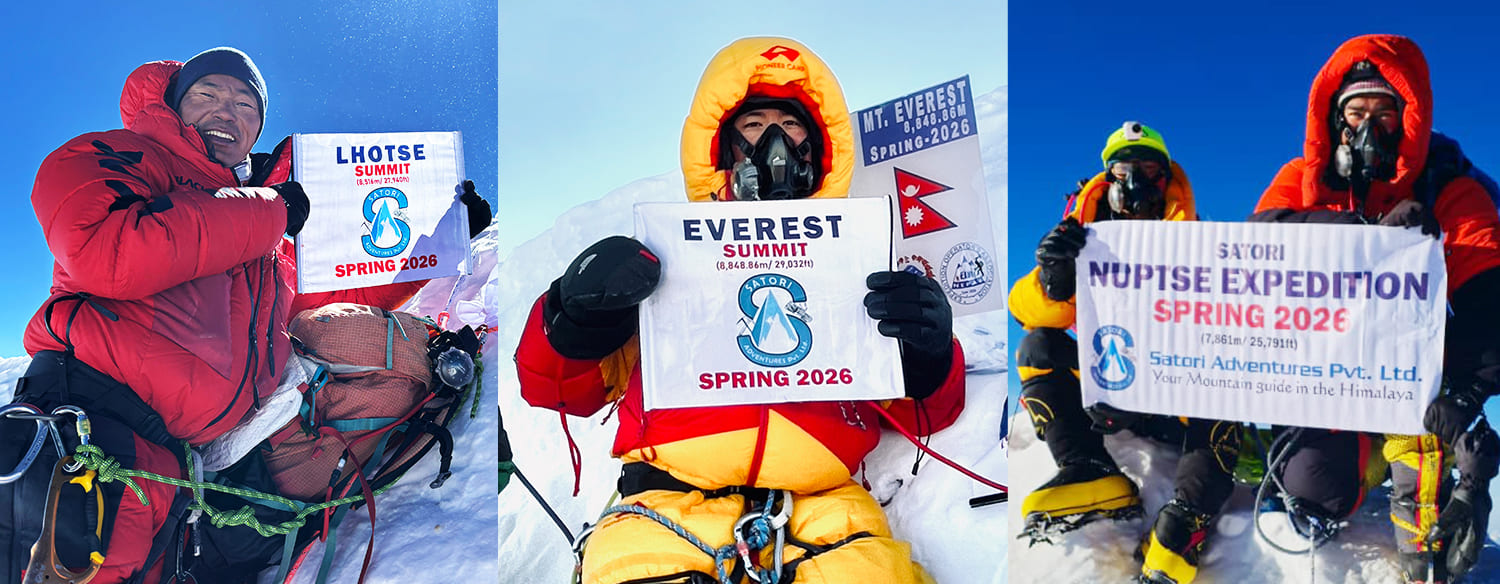
Satori Adventures Everest Expedition Spring 2026, Satori Adventures Lhotse Expedition Spring 2026, Satori Adventures “Double Crown” Expedition Spring 2026, Satori Adventures ‘Triple Crown’ Expedition 2026 successfully concluded with remarkable achievements, setting new milestones and adding a new chapter to the mountaineering history. In this article, we briefly explain how our expeditions were carefully planned and executed so as this challenging task was successfully accomplished
We often celebrate summit photographs, success stories, and congratulate climbers, but we frequently underestimate the immense behind-the-scenes effort contributed by many dedicated hearts and hands. An expedition in the extreme Himalayan region is a highly complex enterprise, supported not only by advanced technology and modern systems but also by human skill and teamwork that make such achievements possible.
This post focuses primarily on the expedition execution process rather than the months of training, years of preparation, and lifelong dreams of our courageous climbers who aspired to stand atop Mount Everest and Mount Lhotse.
We combine the Everest, Lhotse, and Nuptse expeditions into a single story because both mountains share the same Base Camp, climbing route, and camps up to Camp IV, while also relying on the same Sherpa team, logistical systems, and operational support.
For the Spring 2026 expedition, which successfully concluded in the fourth week of May, Satori Adventures’ execution phase officially began in late January with the preparation of expedition tents – the ‘home away from home’ in the mountains. Our team carefully inspected and reinforced every tent, paying close attention to detail to ensure they could withstand the extreme conditions of the high Himalayas.
Then, our Sherpa team – comprising Lakpa Tasi Sherpa, Furte Sherpa, Pasang Gyaljen Sherpa, and Thupten Sherpa – carefully inspected the oxygen masks and regulators in detail. On an Everest expedition, this equipment is a vital lifeline in the death zone, where survival depends on precision and reliability. Any failure of these life-saving systems can quickly lead to hypoxia, rapid unconsciousness, cognitive impairment, and other life-threatening complications. High altitude foods were brought from Canada and Germany itself.
The first batch of logistics, including tents, ropes, oxygen cylinders, medical kits, solar power, and other essential equipment, left Kathmandu on the 27th of February 2026 on a fully loaded truck. After approximately thirty hours of driving, it reached Surke – the last point accessible by road before Lukla. From there, all supplies were transported by Jhopke – a hybrid between a male yak and a lowland cow – along with porters. The second and third batches of logistics departed Kathmandu on 9 March and 13 March, respectively. We used air-cargo for some other items.
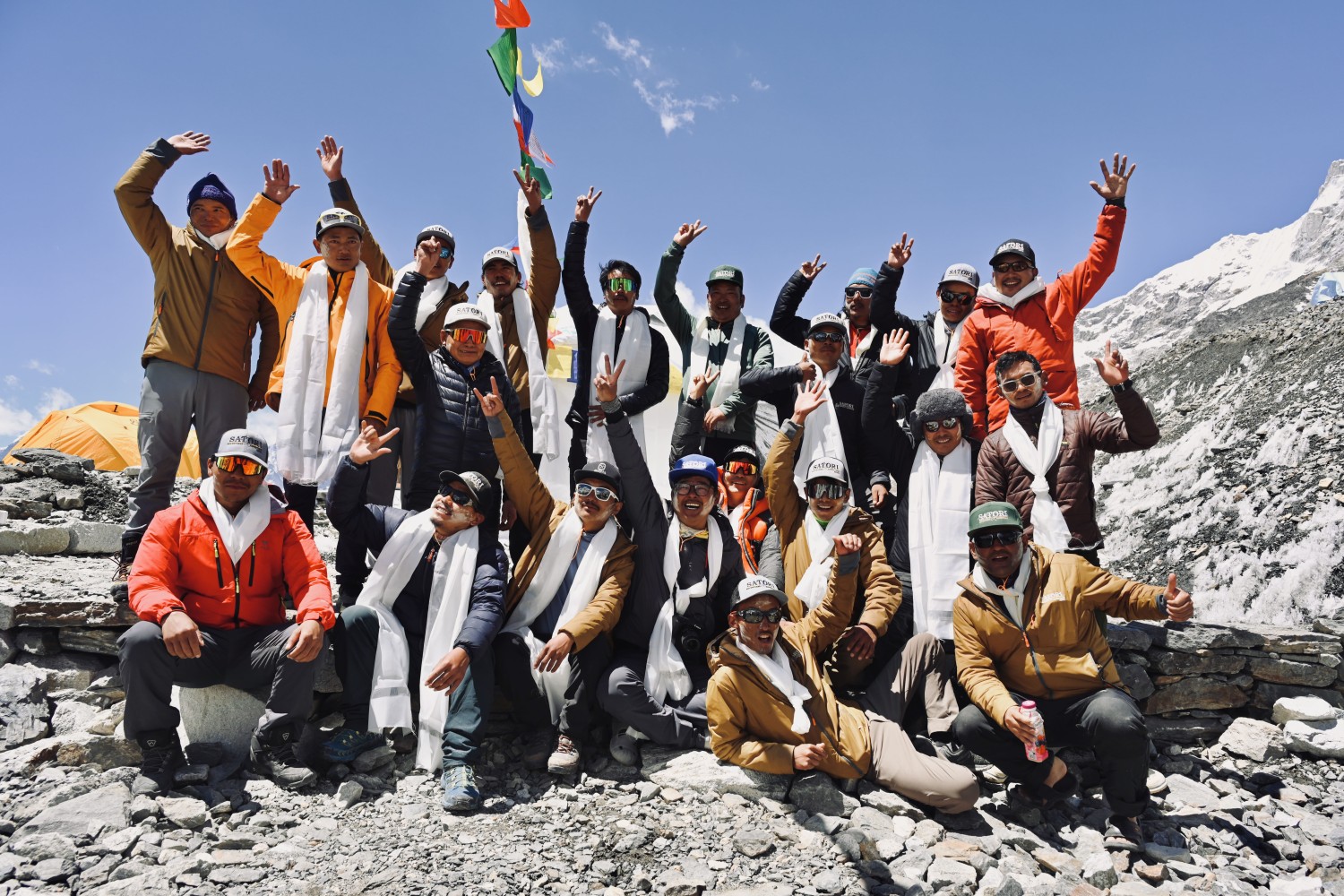
After trucks of logistics left Kathmandu, our first group of Sherpa guides, Furte Sherpa and Ongdak Sherpa, reached to the Base Camp on 17th March to select the most suitable location for establishing the camp. Many of the Sherpa support climbers arrived at Base Camp on 22nd March, including the Base Camp cooking staff: Lil Bahadur Khatri, Ngima Dorjee Tamang, Sharan Tamang, Prem Kumar Tamang, and Pemba Rinji Tamang. In high-altitude expeditions, the kitchen team plays a vital role in ensuring the success of climbers and guides.
Providing nutritious meals, maintaining proper hydration, upholding sanitation standards, and managing camp facilities are all essential for sustaining strength and health throughout long weeks in extreme altitude conditions.
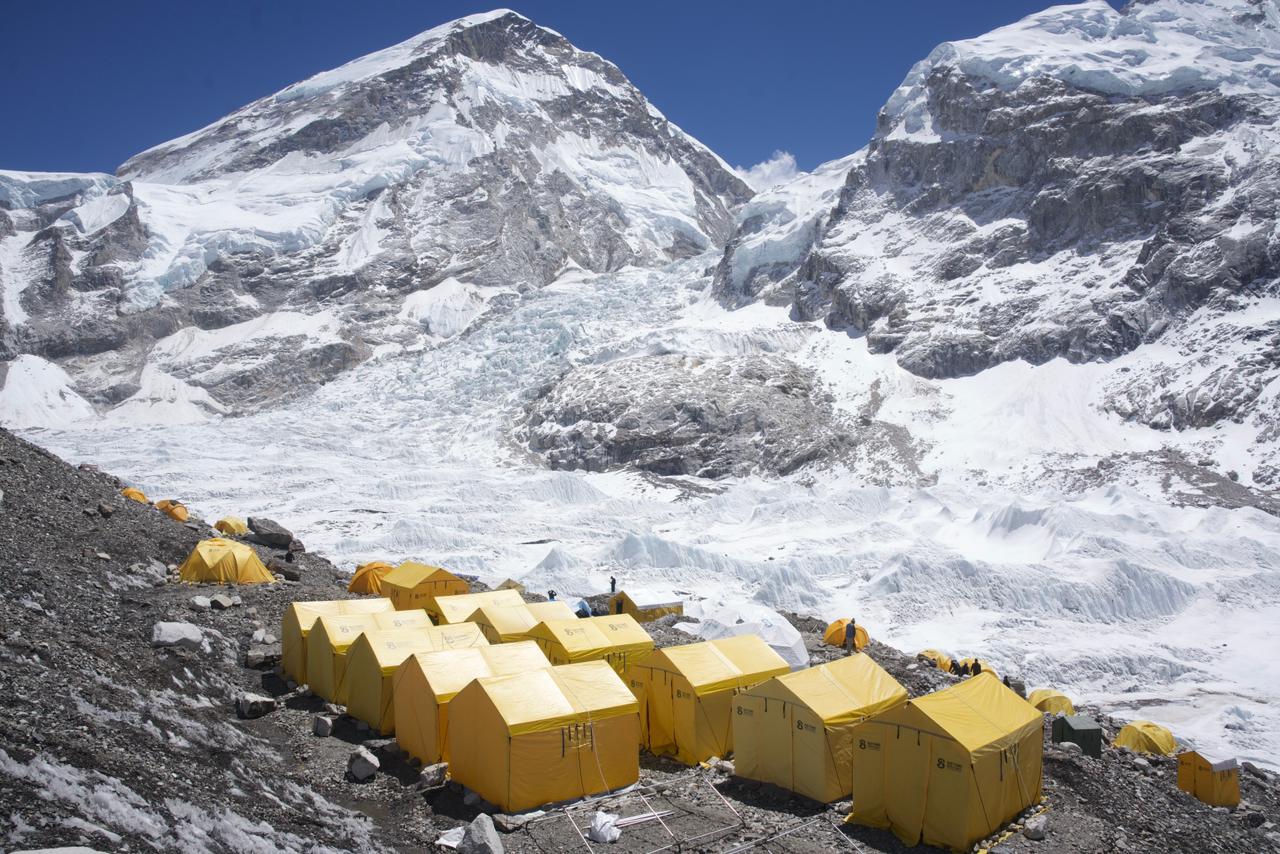
Together, they successfully completed the setup of Base Camp by April 8th, including tents, kitchen facilities, and essential infrastructure, ensuring a comfortable and well-prepared environment for fellow Sherpa guides, support crews, and valued climbers. At this stage, the expedition headquarters became fully operational. The camp transformed into the central command center for all climbing activities, including acclimatization planning, route coordination, weather monitoring, and emergency response preparations.
Our expert mountain technician, Gelje Tamang, established electricity systems powered by solar energy with battery backup support, while communication equipment was thoroughly tested to maintain reliable contact with the Kathmandu office and climbing teams on the mountain.
While preparations at Base Camp were underway, our esteemed climbers began arriving in Kathmandu on April 2nd, filled with great zeal, enthusiasm, and dreams. Satori Adventures carefully selected expedition participants by reviewing each climber’s previous mountaineering experience, physical stamina, and medical reports prior to their arrival. We also conducted a detailed inspection of every piece of equipment to ensure safety, functionality, and readiness for the expedition ahead. These processes improved efficiency on the mountain and played a vital role in helping every climber reach the summit smoothly.
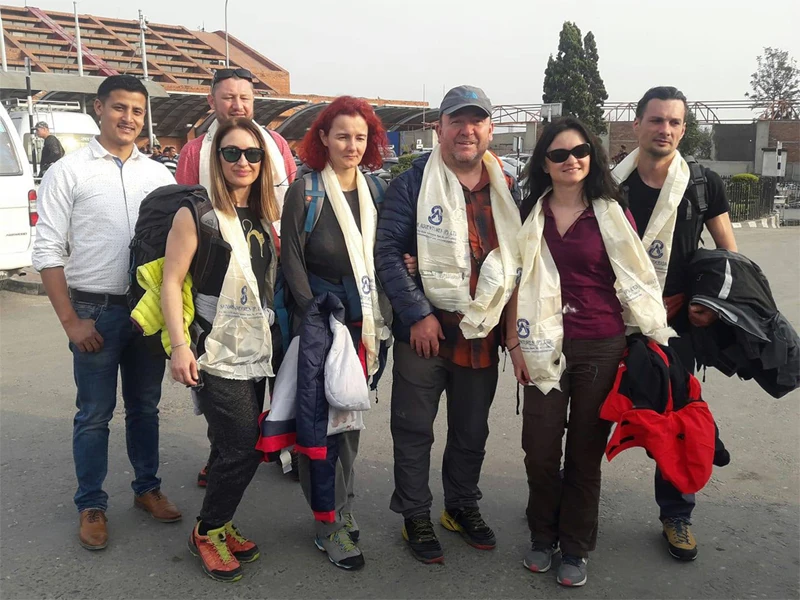
On April 4th, the Sirdar of the Sherpa climbing guides, Mingma Temba Sherpa; Base Camp Manager Bibek Pandey; Lead Expedition Guide Lakpa Tasi Sherpa; and our photojournalist and expedition guide Purnima Shrestha, along with the majority of the expedition team members –including Olena Karlova, Manjunath Thapaya, Nicholas Ellul (‘Nicky’), Magdalena Kowari, Mariusz Mlynarczyk, Sandra Maria Wieliczko, and Rafal Janusz Skrzypiec – landed at the historic Lukla Airport and took their first steps toward the Everest summit.
Before serious climbing activities began, our Sherpa members performed a Pooja ceremony – a sacred Buddhist ritual to seek blessings from the mountain gods; pray for safety, success, and favorable weather conditions.
Yet this year, the story of the Khumbu Icefall was not as smooth and straightforward as in previous seasons. The Sagarmatha Pollution Control Committee (SPCC), responsible for deploying Icefall Doctors to establish the route up to Camp II, faced repeated challenges and was unable to complete the route by the first week of April, which is the usual timeline. SPCC deployed ten expert Icefall Doctors under the leadership of chief leader Ang Sarki Sherpa and team leader Dawa Jangbu Sherpa on 28 February 2026. However, their progress was reportedly obstructed by a massive hanging serac, estimated to be around 180 feet long and 100 feet tall.
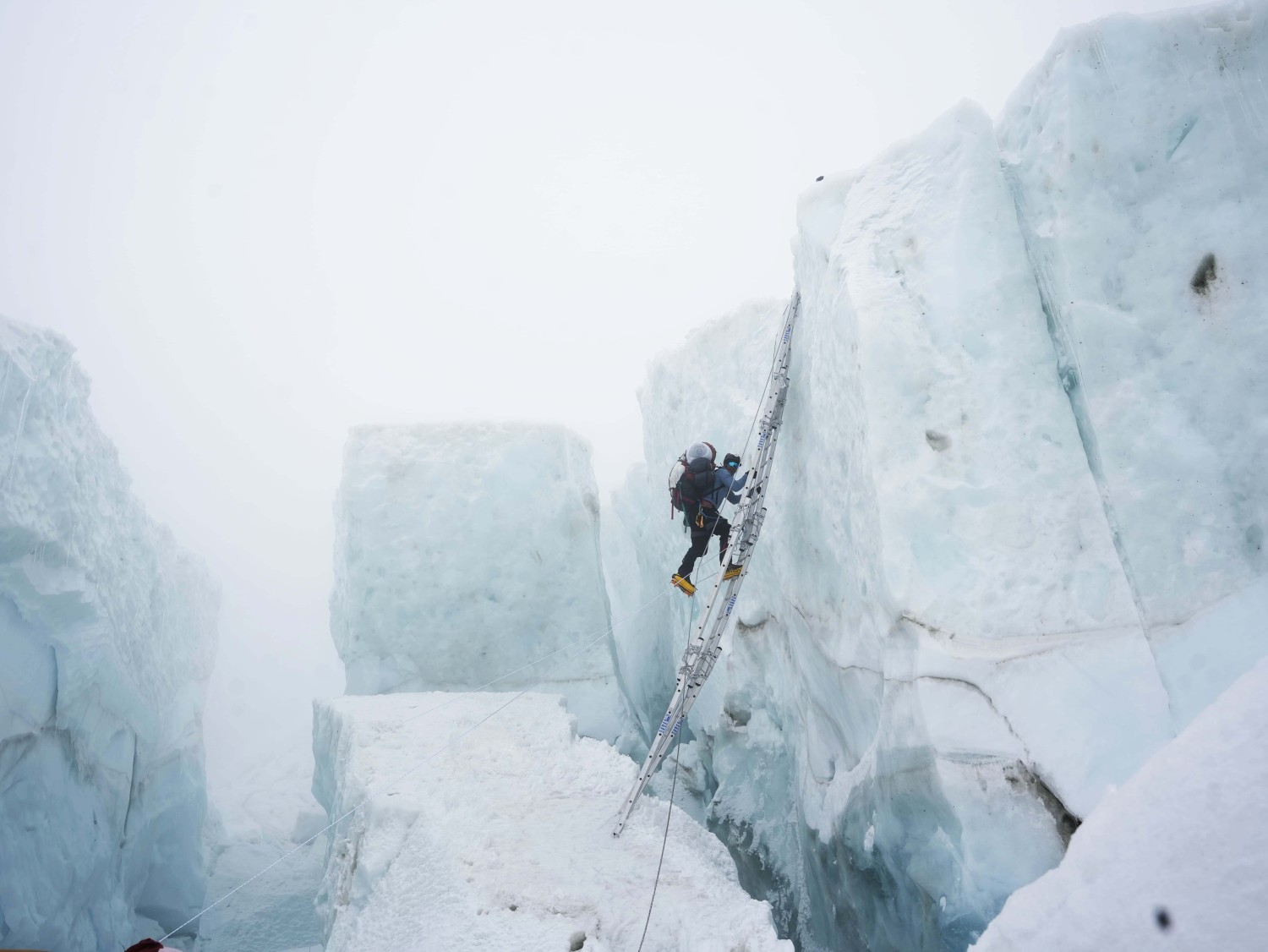
On 24 April, Government of Nepal authorized the Expedition Operators Association of Nepal to deploy an expert Sherpa team through its member companies and coordinate with SPCC’s Icefall Doctors to complete the route to Camp II. In this effort, EOAN General Secretary and Managing Director of Satori Adventures’ Rishi Bhandari played the most crucial role in facilitating collaboration between the SPCC, Department of Tourism, Tourism ministry, and EOAN.
Finally, on 28 April, Camp I and Camp II were successfully established. By 13 May 2026, the rope-fixing team – composed of Sherpas from various EOAN member companies – had reached the summit of Mount Everest, making the route fully ready for climbers’ final ascent attempts.
We extend our gratitude to our Sherpa staff members Pasang Gyaljen Sherpa for inspecting and assisting the Icefall Doctors in fixing the route up to Camp II, and to Lopsang Bhotia for serving as part of the summit rope-fixing team on Everest after Camp II to the summit.
While the Icefall Doctors and rope-fixing teams were working tirelessly to establish the route to the summit, our climbers successfully completed their acclimatization climb on Lobuche East at 6,119 meters (20,075 ft).
Following this important phase, the true Everest acclimatization rotations began, gradually preparing our climbers for the ultimate challenge ahead. With determination, resilience, and teamwork, our team continued their ascent and successfully reached the summit on May 20, 2026 – achieving remarkable milestones, creating history, and setting extraordinary new benchmarks read our early blogpost .
Conclusion
Satori Adventures Everest Spring 2026, Satori Adventures Lhotse Spring 2026, and Satori Adventures Nuptse Spring 2026 – which shares the same route and logistics – and known as Double Crown and Triple Crown expeditions stood as a testament to meticulous planning and execution, team work, and unwavering determination.
From months of preparation and complex logistics to the dedication of Sherpas, support staff, and climbers, every step reflected precision and commitment. Despite challenges in route establishment and harsh Himalayan conditions, the team successfully transformed dreams into historic achievements. Together, these remarkable journeys not only reached the summits but also wrote a new chapter in mountaineering history.