In Nepal, the autumn season is traditionally one of the best seasons for trekking at higher altitudes, climbing smaller 6,000m and 7,000m peaks, and undertaking selected mountain expeditions to mountains like Manaslu and Ama Dablam.
It is characterized by generally stable post-monsoon weather, offering clearer mountain views, better temperatures, suitable weather windows for Himalayan climbing, and festive months for cultural immersion.
However, Autumn 2026 experienced unexpectedly heavy and prolonged rainfall, devastating flash floods, landslides and road damage, heavy snowfall, and avalanches.
These conditions significantly affected our trekking programmes, peak climbing and mountain expeditions.
As we were entering the autumn season and preparing to welcome our trekkers and climbers, the Rasuwa - Bhotekoshi flash flood of 26 August 2026 created great uncertainty for the tourism industry. According to the report published by the National Disaster Risk Reduction and Management Authority (NDRRMA) on 26 September 2026, the flood claimed 1,457 lives, with 5,285 persons reported missing, including 720 foreign visitors. Due to the flood 32,936 people were directly affected and total damage was estimated at USD 2,695.33 million.
We also experienced significant cancellations following news of the floods and the destruction of major highways connecting Kathmandu with western Nepal.
A few of Satori Adventures’ clients were already in the mountains for peak climbing in the Annapurna region, while our Manaslu Expedition team had to take an alternative road route towards Manaslu Base Camp due to road damage. The journey was hectic for all our climbers.
In the second week of September, everything became normal except the Langtang region, so our trekkers and climbers arrived in Kathmandu and left for various trips.
7,000m Peaks Expedition
Satori Adventures operated expeditions in Autumn 2026 to some of Nepal’s most demanding and popular Himalayan objectives, including Mt. Manaslu (8,163m), Ama Dablam (6,812m), Himlung Himal (7,126m), Putha Hiunchuli (7,246m), and Annapurna IV (7,525m).
Among these expeditions, Ama Dablam recorded the highest number of successful climbing results.
The Manaslu expedition was called off on September 22 due to a low-pressure system that had developed over the Bay of Bengal and was forecast to affect Nepal from September 24 to 28.
On September 18, the route-opening and rope-fixing team successfully reached the summit of Manaslu, while our climbers were undertaking their acclimatization rotations between Camp I and Camp II.
However, at the same time, Manaslu experienced extremely heavy snowfall, burying sections of the recently opened route and the fixed ropes. Tragically, on September 20, Dhruba Jyoti Guha, a German national of Indian origin climbing with Makalu Adventure, and his guide, Phursemba Sherpa, lost their lives after being buried approximately seven feet beneath the snow at Camp III in an avalanche.
Taking into consideration the safety of our Sherpa guides, base camp support staff, and climbing members, Satori Adventures made the difficult decision to call off the Manaslu expedition. We had to leave our equipment and other valuable gear at Camp I and Camp II, as transportation and retrieval were almost impossible at the time.
On Himlung Himal, the challenges began from the very beginning. Heavy rainfall caused by a low-pressure system that developed over the Bay of Bengal and affected Nepal between 25 and 27 September devastated the region. On 27 September, an avalanche struck Himlung Himal Base Camp, burying around eighteen base camp staff and Sherpa guides from Himalayan Holidays and Imagine Nepal.
Furthermore, access to the Base Camp was severely damaged, making it difficult to transport expedition logistics and even to trek to the Base Camp.
As the General Secretary of the Expedition Operators Association of Nepal (EOA-Nepal), Satori Adventures’ MD, Rishi Ram Bhandari, facilitated the entire process of transporting expedition logistics to the Base Camp by helicopter and restoring the damaged trekking trail from Koto to Phu Gaon.
On Himlung Himal, Pirzad Kuverji Amalsadiwalla from Canada and Lakpa Tasi Sherpa reached the summit, making theirs the only successful summit of Himlung Himal during the Autumn 2026 season.
Between 28 October and 01 November, Cyclone Arnab, which originated over the Bay of Bengal, brought further challenges to the mountains. Our climbers on the Annapurna IV expedition also decided to call off their expedition due to the unfavorable weather forecast. The team reached approximately 6,300m.
Similarly, the Putha Hiunchuli expedition ended with only one successful summit due to deteriorating weather conditions.
On Ama Dablam, most of the climbers successfully reached the summit. The first and second batches summited on 23 and 26 October, respectively, before Cyclone Arnab affected the mountain weather system. The remaining climbers waited safely at Base Camp during the snowfall due to Arnab Cyclone and made their summit attempts after the weather conditions improved. Further summits took place on 5, 6, and 7 November, followed by two more successful ascents on 17 and 19 November, bringing the Ama Dablam expedition to a successful conclusion.
You can read updates on all our 7,000m expeditions during Autumn 2026 here.
We are happy to conclude the Autumn 2026 expedition season with 100% safe operations, even though we did not achieve cent percent summit success.
6,000m Peaks Climbing
The 6,000m peak climbing programs were another important dimension of Satori Adventures during the Autumn 2026 season. Climbers chose various 6,000m peaks combined with trekking programs, high-altitude passes, acclimatization climbs for bigger objectives, or sometime independently as well.
Most 6,000m peak climbs offer an entry-level mountaineering experience in the Nepal Himalayas and are popular among those who wish to pursue a mountaineering career in the future. Some adventure seekers who simply wish to climb a 6,000m peak and gain high-altitude mountaineering experience also choose to climb these peaks.
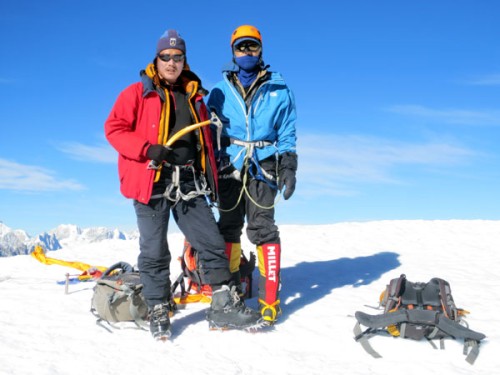
Among the successful climbs this autumn were Chulu Far East (6,059m), Larke North (6,043m), Mera Peak (6,476m), Lobuche East (6,119m), Island Peak (6,189m), Chulu East (6,584m), and Naya Kanga (5,844m).
Many of these climbs served as acclimatization climbs for Mt. Manaslu and Mt. Ama Dablam. Others were combined with various adventure trekking programmes, such as the Everest Base Camp, Three Passes Trek, and Amphu Laptsa Pass in the Everest region, and the Annapurna Circuit, Kang La Pass, and Manaslu Circuit treks in the Annapurna and Manaslu regions.
This autumn we operated some climbing programmes that combined two or three peaks in a single adventure trip. Most of these included Lobuche East and Island Peak, while some programmes also included Mera Peak alongside these two peaks.
In addition, Satori Adventures provided logistical management and ground support to a pioneering new-generation mountaineer and solo alpinist from Germany, who climbed Chulu East Peak via a new route – the South East Ridge Route. He was accompanied by two other mountaineers, Nicolas Scheidtweiler and Manuela Brümmer, and photographer Alexandre Alfred Pichon. Their initial objective was to complete a traverse from Chulu Far East to Chulu West, but they abandoned the entire traverse after Chulu East due to weather concerns and heavy snow on the mountain. To read more about this expedition, you can visit here.
A few 6,000m peak climbing programmes were abandoned or called off during the bad weather window, while some were discontinued due to excessive snowfall on the mountains.
Overall, our 6,000m peak climbing programmes during Autumn 2026 were successful, with a 100% safety record.
You can read our Autumn 2026 complete update of 6,000m Peak climb here.
Trekking in the Foothills of the Himalayas and High-Altitude Passes
Alongside expeditions and climbing programs in 8,000m, 7,000m, and 6,000m peaks, Satori Adventures operated many trekking programs across several major Himalayan regions including Everest, Annapurna, Manaslu, Dolpo and others. These include trekking through the foothills and mid-hill mountain villages, visiting the base camps of various Himalayan giants, crossing high-altitude passes, and combining trekking with climbs of smaller peaks.
Throughout the season, we welcomed individual travelers, private groups, family teams and larger trekking parties from different countries.
This autumn, we began our trekking season with a rather bitter experience. We received serious false allegations from a Korean solo trekker Mr. Ju Hoon Lee who had booked a guide service with us for an Upper Mustang trek. Our service included providing one guide and assistance with the preparation of the required permits, including the Upper Mustang Restricted Area Permit rather all-inclusive trekking package. He had planned a 15-day trek through Upper Mustang, intending to explore the region bit more than regular 7-10 days trekking program.
The Upper Mustang region has remained a restricted area for a long time due to Nepal's geopolitical considerations and sensitivities. In the past, Upper Mustang was subject to strict trekking regulations, and visitors were required to travel in groups accompanied by a government-appointed Liaison Officer.
Following continuous requests and representations from trekking companies and their umbrella organizations, the Government of Nepal introduced changes to these arrangements. More recently, trekking has been permitted without a Liaison Officer, and individual permits have also started to be issued. Under the revised arrangements, trekking companies themselves have also been entrusted with the responsibility of ensuring that trekkers comply with the applicable legal provisions and regulations.
In such sensitive region and scenario, it seemed that Mr. Lee wanted to travel independently, without a guide, once he entered the region. Thus, he made several false allegations, claiming that the guide was unable to speak English, was unfamiliar with the trekking routes, and that the trekking trail followed the highway, among other complaints.
These allegations were entirely unfounded. Before embarking on the trek, he had spent more than an hour discussing the arrangements with the guide at our registered office. Furthermore, the guide we assigned to him was highly experienced in Himalayan trekking, with more than twenty years of guiding experience across almost all regions of Nepal, including twelve visits to Mustang. He has experience of climbing various Himalayan peaks. In addition, the guide had climbed the Matterhorn in the Swiss Alps and had experience in hiking and skiing in the Swiss Alps.
Mr. Lee sent the guide back and wanted to travel alone. However, due to geopolitical considerations and stricter rules, the Government of Nepal required him to leave the restricted region, as he was then travelling without a Liaison Officer, in this case, the trekking guide representing Satori Adventures.
We regret that Mr. Lee’s experience was not good one with us. However, we did everything we reasonably could assist him and could not accommodate his unreasonable demands came out of his malicious intentions.
We learned some important lessons from this trek. We remain committed to providing the best possible services, ensuring that our guides, staff, and clients are treated fairly, and complying with all applicable rules and regulations.
After unpleasant trekking experience with the Korean trekker, we began our trekking season with two wonderful trekkers, Luis Otaduy Castillo and Marta Ibarreta Fanlo from Spain in the Manaslu circuit trekking from 30th August.
Again, when we were ready to welcome our major trekking groups, prolonged and unpredictable weather pattern across Nepal impacted our various trekking programs this year.
In the Manaslu and Annapurna regions, the situation became particularly difficult following heavy rainfall and river flooding on 26-27 September due to low pressure system developed in the Bay of Bengal and flash flooding in the Budhi Gandaki River on 11 October.
The late-October weather disturbance associated with Cyclone Arnab with heavy rainfall, heavy snowfall, and strong winds impacted our trekking programs of various regions. Excessive snowfall due to this changing weather system made some passes impassable such as Kongma La for some trekking groups.
In the Annapurna region, trekkers completed the Annapurna circuit trekking with some Tilicho lake journeys, crossed Thorong La pass and Kang La pass, explored Annapurna Sanctuary (Base Camp), trekked to Mardi Himal region, visited remote settlements of Nar-Phu Valley, and trekked to Upper Mustang region.
Some trekkers only could do Manaslu Circuit trekking this season, and Tsum Valley trekking was re-routed to other trekking as the October flood damaged the access trail to this beautiful valley.
The Everest region remained one of the major destinations for our clients. They explored the classic Everest Base Camp route, visited Gokyo Lakes, crossed Renjo La, Cho La, and Kongma La passes, climbed Kala Patthar, and crossed challenging Amphu Laptsa Pass. Some adventure trekkers combined their trekking with climbing objectives such as Lobuche Peak and Island Peak as well testing their mountaineering stamina.
If you want to read a detailed trekking update of our Autumn 2026 season, you can read here.
A Final Reflection:
As we approach the conclusion of the autumn season, with only a few trekking groups still in the mountains, we look back with pride on our safe and successful operations. For Satori Adventures, this Autumn 2026 has been a hectic season, with demanding operational months due to challenging weather conditions and a large number of clients. We welcomed record high number of adventure lovers this season in the Nepal Himalayas.
Through the teamwork, dedication, and commitment of our entire team at Satori Adventures, we concluded the season with positive results and be proud of it.
From a successful season on Ama Dablam, both in terms of summit achievements and safety, to safe expedition operations on other mountains, including Himlung and Putha Hiunchuli, as well as numerous 6,000m peaks and trekking adventures across the Everest, Annapurna, Manaslu, Langtang, Mustang, and other Himalayan regions, we can look back on a season of challenges, dedication, and achievements.
We thank all our international clients, our partner agencies, expedition leaders, trekking group leaders, Sherpa guides, Trekking guides, Kitchen staffs, Porters, logistics teams, helicopter operators, government and non-government authorities.
We are equally grateful to our clients for their understanding and cooperation when weather conditions and unforeseen circumstances required changes to their original plans.
At Satori Adventures, we remain proud to be leading mountaineering operator, sharing the mountains of Nepal with the world through local expertise, professional service, responsible operations and a deep respect for the Himalayas.
We look forward to welcoming our climbers and trekkers again for their next Himalayan adventures.