Climb Iconic Peaks in the Himalayas with Satori Adventures: Autumn 2026 Adventure awaits
As autumn (September - November) months nearing, we are now excitedly preparing for the 2026 Autumn season Peak climbing in the Nepal Himalayas.
It is premier season for climbing Nepal's 6,000-meter peaks as weather becomes beautiful and stable following the summer monsoon. Mountain conditions is more predictable, clear skies and all peaks sit below the Jetstream making the climb comfortable and enjoyable.
In these peaks snow and glacier conditions are also typically favorable in Autumn. Fresh post-monsoon snow helps to cover loose scree, rocky terrain improving route quality for climb. Combined with longer periods of stable weather, these conditions contribute to higher summit success rates on Nepal's iconic 6,000-meter peaks. For climbers seeking a safe, scenic, and rewarding Himalayan adventure, autumn offers some of the best climbing conditions of the year.
The Nepal Himalayas is home to more than 1,300 peaks above 6,000 meters, and some of these are classified as “trekking peaks” and open for climbing. These peaks involve little to moderate technical climbing, making them accessible to a wide range of climbers and offering excellent options to advance your mountaineering journey.
In terms of physical difficulty, climbing these 6,000-meter peaks can range from moderate to challenging, depending on an individual’s fitness, strength, and stamina. Summit day often takes 10-14 hours at high altitude, involving travel across moraines, steep snow slopes, and rocky sections in cold conditions and thin air. The descent can also be physically demanding. So, for successful ascents require a good level of physical fitness, mental strength, and endurance, along with basic mountaineering skills.
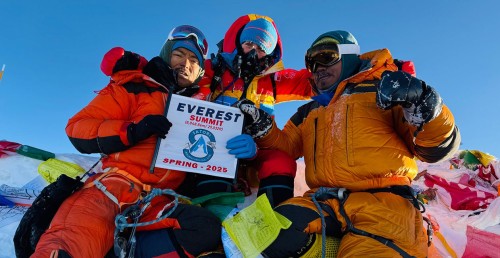
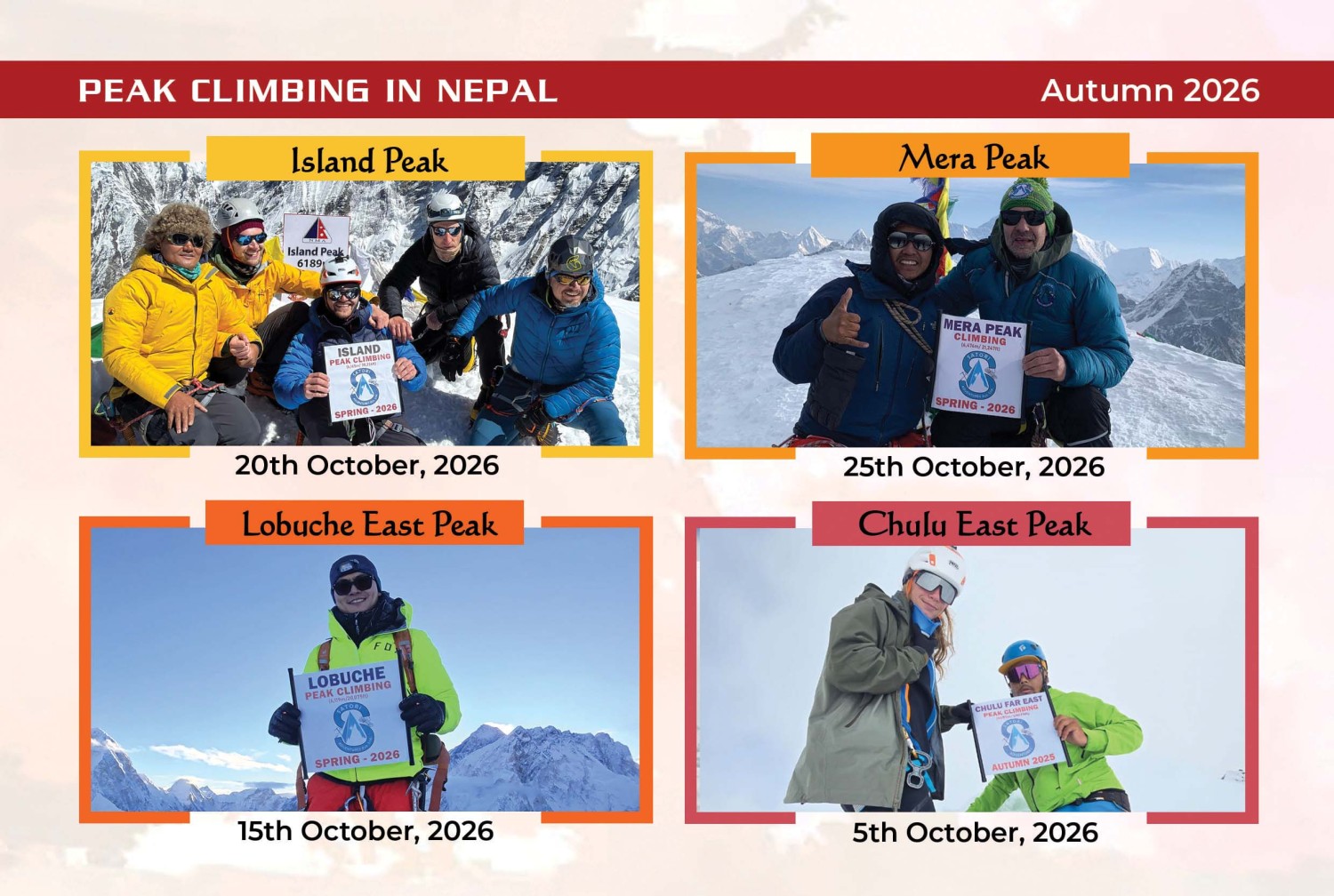
We have concluded a wonderful spring season, with hundreds of climbers successfully reaching the summits of Himalayan peaks. Some of the major climbs we organized in Spring 2026 include Island Peak climbing, Mera Peak, Lobuche East, and Chulu, along with numbers of high-altitude 8,000-meter expeditions in Everest, Annapurna, Dhaulagiri, Kanchenjunga, and more.
Our clients have returned from the Himalayas with unforgettable memories of towering peaks, the warm hospitality of local communities, encounters with cultural ceremonies, and a deep sense of inner peace through our expert organization.
During these peak climbing trips, you witness the view of gigantic Himalayan peaks, such as Everest, Lhotse, Makalu, Annapurna, and Dhaulagiri from different peak climbing program.
Out of many trekking peaks, we select few peaks for the autumn adventure such as Island Peak, Lobuche East and Mera Peak from Everest region and Chulu East and Chulu West from Annapurna region.
Island Peak (6,189m)
Island Peak (6,189 meters / 20,305 feet) is a great choice for novices starting their Himalayan climbing journey. This peak is one of Nepal’s most frequently climbed and well-supported trekking peaks, as it lies along the classic Everest Base Camp trekking route. Trekkers can combine this peak climbing experience with the Everest Base Camp trek, making it a highly rewarding adventure. By Himalayan standards, it is considered non-technical, meaning it does not require advanced mountaineering experience.
The access route is well established, and teahouse accommodation is available up to Chhukung, near Island Peak Base Camp. The journey follows the classic Everest Base Camp trail through Namche Bazaar, Tengboche, Dingboche, and Chhukung before reaching Island Peak Base Camp. Along the way, you can enjoy spectacular views of Everest, Lhotse, Ama Dablam, Baruntse, Makalu, and other Himalayan giants.
As mentioned, although it is suitable for novices, Island Peak is still a serious Himalayan climb surrounded by some of the world’s highest and toughest giants, that requires good preparation. Basic mountaineering knowledge – such as using crampons, an ice axe, fixed ropes, and ascenders – is recommended. Our Sherpa guides provide a short training session at Base Camp so you can practice these skills before the summit attempt. A good level of physical fitness, supported by regular cardio training (running, cycling, hiking), strength training (legs, core, back), and strong mental endurance in extreme conditions, can be helpful for a safe and successful summit.
If you are ready now, embark on our Island peak expedition program.
For more information, read our Island Peak expedition FAQs.
Mera Peak (6,476m)
Mera Peak is one of the highest trekking peaks in Nepal Himalayas and one of the country's most popular climbing objectives. It is highly regarded for offering one of the most spectacular viewpoints in the Himalayas. From its summit, climbers can enjoy breathtaking views of five of the world's highest mountains – Everest, Lhotse, Makalu, Cho Oyu, and Kanchenjunga creating a truly unforgettable Himalayan mountaineering experience.
The route traverses the remote and less crowded Hinku Valley from Lukla, providing great wilderness and rare exploration opportunity. Climbers pass through pristine forests, high alpine meadows, and glacial landscapes before reaching high camp and beginning the summit push.
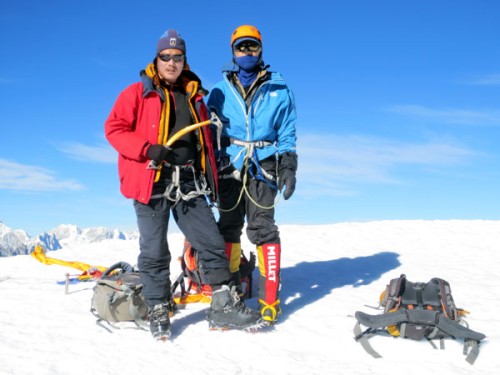
Mera Peak is also non-technical peak; however, it is still a serious climb in the Himalayas due to peak’s location. Prior mountaineering experience is not strictly required to climb Mera Peak, but basic mountaineering skills and knowledge of climbing equipment – such as use of crampons, an ice axe, fixed ropes, and ascenders (Jumar), as well as basic descending or rappelling techniques – will also be helpful. Our Sherpa guide, at the Base camp or High camp of Mera Peak will conduct a short training session on use of climbing equipment required for your summit bid, if you are not familiar with.
Join our Autumn 2026 Mera Peak expedition.
To know more about read our Mera Peak Expedition FAQs.
Lobuche East Peak (6,119m)
Lobuche East is widely regarded as one of Nepal's most thrilling trekking peaks due to its technical climbing requirements and breathtaking scenery. Situated near Everest Base Camp, the peak offers a more demanding mountaineering experience than Island Peak or Mera Peak in the region.
The approach to Lobuche peak follows the classic Khumbu trail, passing through traditional Sherpa villages of Namche Bazaar, Tengboche, Pangboche and spectacular high-altitude landscapes. As part of the acclimatization process, you will first visit Everest Base Camp (5,364 m / 17,598 ft) and then climb Kala Patthar (5,545 m / 18,192 ft), one of the finest viewpoints in the Everest region. From its summit, you can enjoy breathtaking close-up panoramas of Mount Everest, Pumori, Nuptse, Lhotse, Ama Dablam, and numerous other Himalayan peaks.
The climb of Lobuche peak includes glacier travel, fixed rope sections, and an exposed summit ridge that delivers a genuine alpine adventure.
Thus, if you are looking to enhance technical mountaineering skills and gain valuable high-altitude experience in preparation for future ascents of the Himalayan giants, Lobuche East is an excellent choice. The summit rewards climbers with magnificent panoramic views of Everest, Lhotse, Nuptse, Ama Dablam, Pumori and countless surrounding peaks.
With Satori Adventures' experienced climbing team, meticulous planning, and well-designed itinerary, you can opt for a successful summit during the exceptional Autumn 2026 climbing season.
For more information read our Lobuche Peak Expedition FAQs.
Chulu West Peak (6,419m)
Chulu West is one of the most remarkable climbing peaks in the Annapurna region, offering a combination of challenging mountaineering, remote landscapes, and spectacular mountain vistas. The expedition follows sections of the renowned Annapurna Circuit before ascending into a high alpine environment dominated by glaciers and towering peaks.
The climb demands good physical fitness, determination, and previous climbing experience. Climbers are rewarded with magnificent views of Annapurna, Dhaulagiri, Manaslu, and the Tibetan Plateau from the summit. The remote setting and lower traffic compared to Everest-region peaks create a more exclusive and adventurous atmosphere.
For climbers aspiring to take on more demanding Himalayan objectives in the future, Chulu West offers an unforgettable mountaineering experience. Combining technical challenges, high-altitude adventure, and spectacular mountain scenery, it serves as an excellent stepping stone toward greater Himalayan expeditions.
Satori Adventures carefully designs the itinerary with acclimatization schedule, technical training, and summit logistics to maximize safety, comfort, and success. With stable weather, clear skies, and favorable climbing conditions, Autumn 2026 provides an exceptional opportunity to summit one of Nepal’s most rewarding trekking peaks.
For more information read our Chulu West Peak Expedition FAQs.
Chulu East Peak (6,584m)
Chulu East stands as one of the most attractive trekking peaks in the Annapurna region and is highly regarded for its dramatic landscapes and rewarding summit views. Rising above the Marsyangdi Valley, the peak offers an exciting combination of trekking, cultural immersion, and alpine climbing.
The expedition passes through traditional Gurung and Tibetan-influenced villages, allowing climbers to experience the rich cultural heritage of the Annapurna region. As the journey progresses into higher elevations, stunning views of Annapurna II, Annapurna III, Gangapurna, Tilicho Peak, and Manaslu dominate the horizon.
The climb involves glacier travel and moderate technical sections, making it suitable for adventurous trekkers seeking a significant Himalayan achievement. Standing on the summit of Chulu East is a moment that remains with climbers for a lifetime. With Satori Adventures' professional support, expert guides, and commitment to safety, Autumn 2026 is the perfect season to make your Himalayan dream a reality.
For more information read our Chulu East Peak Expedition FAQs.
Book Your Autumn 2026 Peak Climbing Adventure Today
Autumn 2026 departures are filling quickly, and climbing permits, guide availability, and lodge accommodations are limited during Nepal's peak climbing season. Don't miss the opportunity to secure your place on one of the Himalayas' most rewarding adventures. Whether your goal is Island Peak, Mera Peak, Lobuche East, Chulu East, Chulu West or other peaks, Satori Adventures is ready to help you reach the summit.
Booking is now open, and early reservations are strongly recommended to guarantee preferred Sherpa guides and better departure dates. Contact Satori Adventures today and take the first step toward your Himalayan success story.
Booking for Autumn 2026 is now officially open.