What happened on August 26, 2026, in Nepal?
In the early morning, at around 8:40 a.m. on August 26, 2026, a disastrous flash flood struck the Nepal-China (Tibet) border at Rasuwa Gadhi. The Bhote Koshi River, flowing down from Gyirong town, and the Lhende Stream, flowing down between the Nepal-Tibet border, meet at this border post and flow down under the name Bhote Koshi - Trishuli River in the lower section, which was flooded unimaginably.
As a massive rock-ice-mudslide initiated the flood as various studies have shown, and scientists estimate the speed to be around 180 to 193 km/h (110 to 120 mph) for the first thirty kilometers. The narrow gorge, huge debris flow, and the speed of the flood in pretty steep mountain slope swept away many towns, villages, infrastructures, and people.
Due to the flood, more than 1,000 people from many different countries are confirmed dead, and a few thousand are still missing. The Government of Nepal is working hard, with support from the international community and neighboring countries, to carry out rescue, recovery, and rehabilitation efforts.
What is the current situation in Nepal right now in the flooded area?
Besides the loss of human lives and monetary value along one river corridor, the situation in other parts of Nepal is running normally. This time, the disaster did not affect the entire country, as it did during the April 2015 Earthquake and COVID-19. Therefore, the situation in Nepal now is also not as severe as it was earlier.
The Government of Nepal and the international community, which has arrived to support the Government of Nepal, are working in the Bhote Koshi–Trishuli River corridor.
The Government of Nepal has called for an assistance with the global community. And, after search and rescue come to an almost end, government now focus on relief and rehabilitation to the persons rescued.
The Government of Nepal has called for assistance from the global community. Along with the search and rescue operations, the government, public agencies, and social organizations and individuals are now focusing on relief and rehabilitation for the rescued people.
Right now, Galchhi - Trishuli - Mailung - Syabrubesi - Timure - Rasuwagadhi Highway (part of National Highway 42 / NH42) is completely closed and severely disrupted due to a massive flash flood. So, the tour to Kailash and Mansarovar, and Lhasa (Tibet) is totally stopped. And, there is no timeline for when the highway will come into operation.
The Kathmandu-Dhunche section has reopened via a new route for small four-wheelers. The road is not very good, though. Through this route, you can travel to Dhunche, Langtang Valley, and the Gosainkunda Lake area.
The telecommunications services that were disrupted have been almost fully restored. Around 40% of the electricity restoration has also been completed.
What is the current situation in other parts Nepal?
As mentioned earlier, since the impact of the flood is limited to certain parts of the country, Nepal is not closed for tourism and other activities.
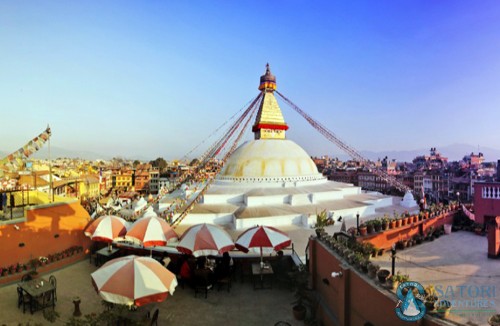
Nepal’s most important tourist destinations, such as Kathmandu, Pokhara, Chitwan National Park, Lumbini, and all the major trekking and expedition regions, are continuing to operate.
The road networks from Kathmandu to Pokhara, Kathmandu to Chitwan, Kathmandu to Beshisahar, and Kathmandu to Lumbini have been disrupted due to the Bhotekoshi -Trishuli River flood. However, alternate routes to these places have already been established, and you can travel to these destinations.
These major destinations are also well connected by flights. You can fly to Pokhara, Chitwan, and Lumbini from Kathmandu, and all the airports are operating normally.
So, Kathmandu, Pokhara, Chitwan, the Everest region, Annapurna region, Manaslu region, Makalu and Kanchenjunga regions, and other parts of Nepal are operating normally. Langtang can be visited through the Melamchi region and via the alternative road access to Dhunche. However, the monsoon is still active in Nepal, so precaution and careful planning are advised.
What is the situation of telecommunications and electricity after the flood in Nepal?
Immediately after the disaster, telecommunications were badly affected in the flooded regions, particularly in Rasuwa District (the Langtang region and along the Nepal-Tibet border), Nuwakot District, and Dhading District (along the Kathmandu-Pokhara/Chitwan highway).
According to government sources, a total of 87 Nepal Telecom and Ncell towers were initially affected. However, the government reports that, as of September 2, 2026, 95% of the telecommunications network has been restored.
However, in remote areas, trekking regions, and the higher mountains, the network can be weak even under normal conditions.
And, for the mountaineering we use satellite phone for communication.
Hydroelectricity infrastructure was among the most severely damaged and destroyed by the flood. Around 12-13 hydropower plants, with a combined capacity of more than 200 megawatts, are currently shut down. As a result, there is some pressure on the national electricity distribution system. However, the situation remains manageable, and there have been no serious power cuts.
Is it still Safe to travel to Nepal then in Autumn 2026?
Yes, Nepal is safe to travel to this autumn.
However, like any other mountain destination, Nepal also has the risk of natural hazards such as landslides, avalanches, floods during the monsoon season, and others. Therefore, precautions are always required and you need to understand that there is no one hundred percent.
The last flood was not caused by monsoon rain; rather, a huge avalanche-landslide might have been caused by climate change.
So, the autumn season will be normal, like in earlier years, and it is going to be a good season to travel in the mountains.
We are experienced local operators who work to keep you safe and secure during your trip. We understand how to adjust routes, manage transportation, and modify itineraries when necessary.
At Satori Adventures, we monitor weather, road, trail, and regional conditions and work closely with our local teams to ensure that our guests travel as safely and responsibly as possible.
Nepal and Satori Adventures are ready to welcome travelers for the Autumn 2026 season.
So, tourism is continuing, and I don’t have to cancel or postpone my travel plans?
No, Tourism in Nepal is continuing, and you do not need to cancel or postpone your planned Nepal trip. We are saddened by the demise and missing of hundreds of tourists who came to Nepal to enjoy the beauty and spirituality of Nepal and Tibet.
But, as mentioned already that this flood has not affected the entire country. And, you do not have to cancel your planned trip or postpone.
Nepal Tourism Board on 2nd September, under the "Nepal Calling" post update states that:
- Hotels and tourism services are open.
- Major tourism services are operating.
- International and domestic airports are operating normally.
- Nepal Tourism Board has established response teams and tourist information support.
- Visitors are being encouraged to continue travelling to Nepal.
What Does Satori Adventures Recommend for Autumn 2026 Travel?
Following the devastating flash floods, there are some travel disruptions. As Nepal is still in the monsoon season, we may experience some heavy rains for some tours which are confirmed right now. Some roads have been damaged by the floods and landslides, but there are plenty of alternative routes available for travel and we are operating through.
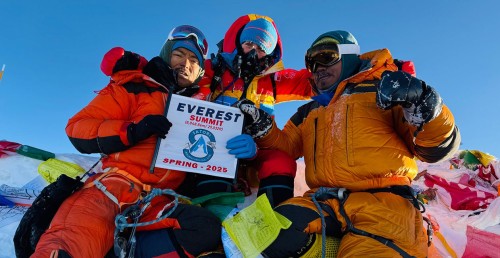
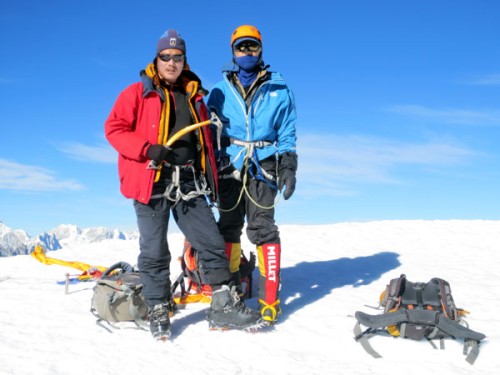
Our clients are already in the mountains in the trekking and climbing Chulu Far East, Larke La Peak, the Manaslu region, Annapurna, and Everest region and they are enjoying their trips with monsoon rain.
All our confirmed trips will operate normally, and we would like to request and assure our clients to be secured in our hands.
In fact, Nepal has lost billions of USD due to this flood and will seriously hamper the entire economy. So, your travel to Nepal in this hour is not only the travel but will be a huge support to Nepali economy.
We thus say: Wider Himalayan Region is Unaffected by the Recent Flood. It remains Safe and Operational.
Visit Nepal, YOUR VISIT MATTERS.